
Flower Arranging Series (Part 2) ~ Caring For Your Flowers
Flower Arranging Series: (Part 2) Caring For Your Flowers.
How to harvest, condition, hydrate, feed, and keep cool.
In part 1 we talked about prepping your space, what tools you might need, vases and vessels and other fun mechanics you can use.
In part 2, we are talking about caring for your flowers before you arrange them. From harvesting from the field and the care they need. This is a super important step in the life of your flowers.
I mean… you put a lot of work into them and it’s not super cool when they wilt or look bad after you spend your time arranging them.
This is a super easy step, doesn’t take much time but is super crucial.
So let’s dive in.
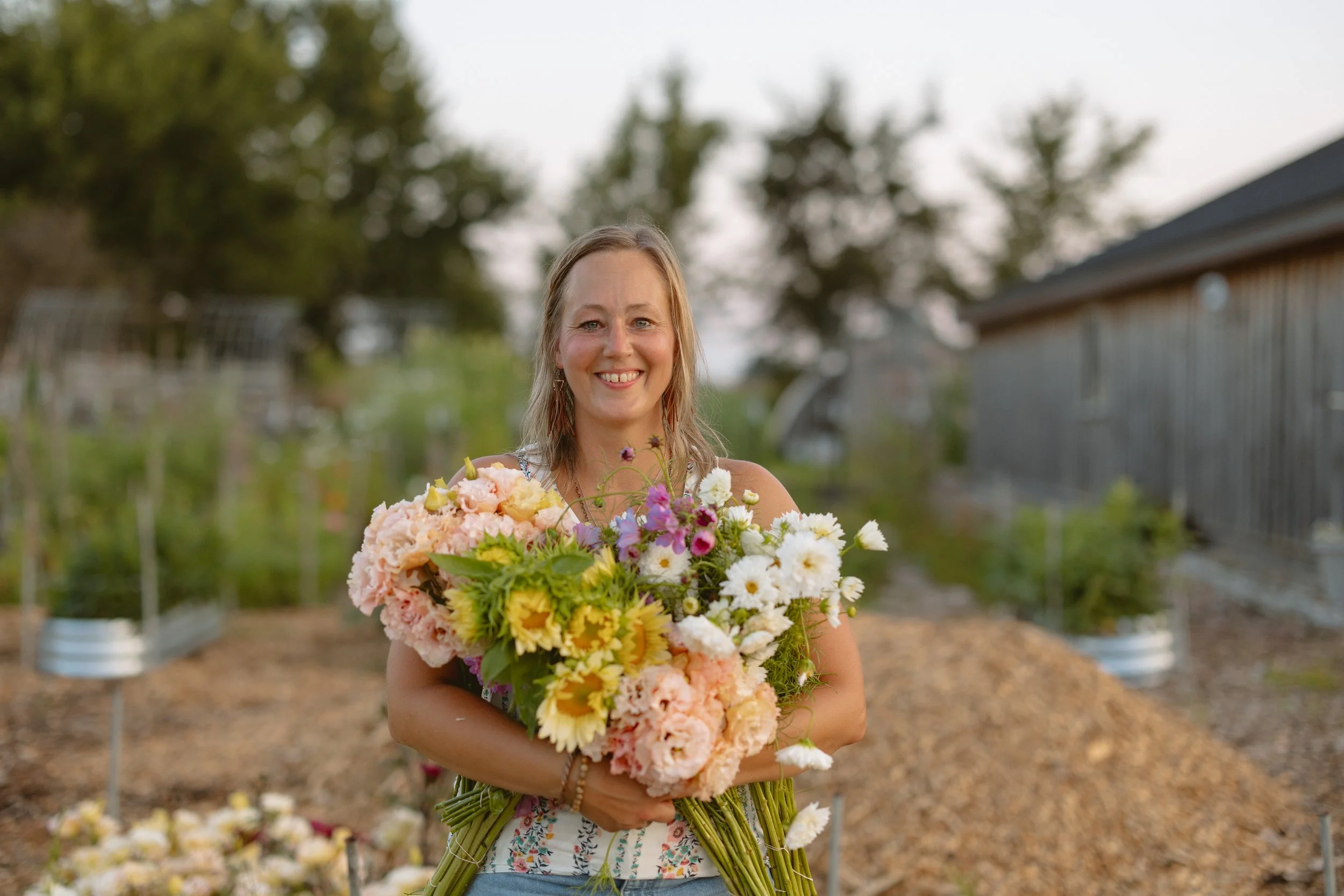
When I started growing flowers, I was totally overwhelmed by all the information. This flower needs this kind of care, and this one needs to be boiled, seared, refrigerated, and on and on. It was very overwhelming.
Harvesting cut flowers can be an enjoyable and rewarding task. It can be done without becoming completely overwhelmed or without losing the vase life of your flowers.
I know how that feels and will simplify the process for you!
Here's a step-by-step guide to help you through the process:
1. Choose the right time: Early morning or late evening is ideal when the temperature is cooler, and the flowers are fully hydrated. Harvesting your fresh flowers in the middle of the day is possible, but they have a good chance of wilting. If you do harvest in the middle of the day, choose a cloudy, overcast day.
2. Gather your supplies: Before you begin, gather the necessary supplies, including sharp snips or scissors, a clean bucket filled with room temperature water, and additional materials like flower preservatives or plant food.
Remember, clean, clean, clean. If you don’t drink out of that bucket, neither do your flowers: clean buckets, pruners, and water. You can add a drop, and I mean only a drop, of bleach to the water to help keep bacteria from growing and spoiling your flowers.
3. Selecting flowers: Look for flowers in their prime, with good color, firm petals, and no signs of wilting or damage. Don’t harvest flowers that are past their peak or already fading.
Here are a few tricks for certain flowers.
Zinnia’s need to have nice, stiff stems, no wobbling, or they will wilt.
Sunflowers last the longest if you harvest them when their heads start opening.
Celosia, I usually give it the wobble test, too. If it’s too wobbly, wait.
Snapdragons should have 1/3 of the flowers open.
Lisianthus - wait until the first bloom fades and the others start opening.
Cosmos - These usually have a spray of flowers. Buds that are just about to open are what you want. I will harvest them if there are some open ones, as long as there are more to follow.
4. Prepare the stems: If there are any leaves or thorns along the lower portion of the stem, gently remove them. lean 9stems are just as important as clean vases and pruners. I probably remove 2/3 of the leaves on the stem. We are trying to keep leaves alive, we are trying to keep the flower happy.
5. Make a clean cut: Use sharp snips or scissors to make a clean, angled cut on the stem, about 1 to 2 inches above the base of the plant. Cut deep, not from the top, cut deep into the plant. Don’t be shy, you can do it!
6. Place in water immediately: When you cut the flower, place it directly into the clean bucket filled with room temperature water or whatever comes out of your hose. Just remember again, a clean bucket and clean water. Don’t let your sweet, cute dog drink out of your buckets as mine do.
7. Repeat the process: Continue harvesting your desired number of flowers, following the previous steps for each stem.
8. Let your flower condition: This means let them rest. Find a cool, dark spot and let your flowers recover from their trip out of the field. They want a little time to get acclimated and rehydrate. Well, I don’t always do this right away; I try really hard to let my flowers sit for a little bit before or after I arrange them.
A fridge works great, on one condition. It can’t have fruits or veggies in it. They emit a gas that will kill and significantly shorten the lifespan of your flowers.
9. Flower Food
There are a couple of different types of flower food. To be honest, you don’t have to use anything. But I do get asked about this a lot, so I’ll give you some tips, and you can decide whether you want to go that route.
Hydrating products: These are not the same as flower food. They are put in the bucket as you harvest. This helps your flowers absorb water. I typically don’t use this on annuals; I use it mostly on branching, woody stems.
Storage and holding solution: This is used in the bucket to help hold the flowers. I use this when I put them in the cooler for a few days. It prevents them from opening further. Obviously, this doesn’t last super long, but it’s good if you need to save your flowers for a few days.
And last: Flower Food. This is used when you make your arrangement. It’s the little packet you get with your bouquets that you dump in the vase. It gives your flowers exactly what it says, food. A little sugar to open up and keep blooming. It can also help keep the water cleaner.
Are you feeling confident? Does it make more sense now?
I created a cute little cheat sheet called “Your Simple Flower Arranging Guide” for you to print and take with you in the garden. I want you to feel confident and cut your flowers with the mindset that it's a fun experiment and learning process.
Pretty soon, you won’t need the cheat sheet at all.