How to Grow: Gomphrena
How to Grow Gomphrena
Can we all just agree that gomphrena is one of the funniest flower names ever?
Seriously. Try saying it out loud a few times.
It doesn't exactly roll off the tongue.
But once you grow it, I promise you'll never forget it.
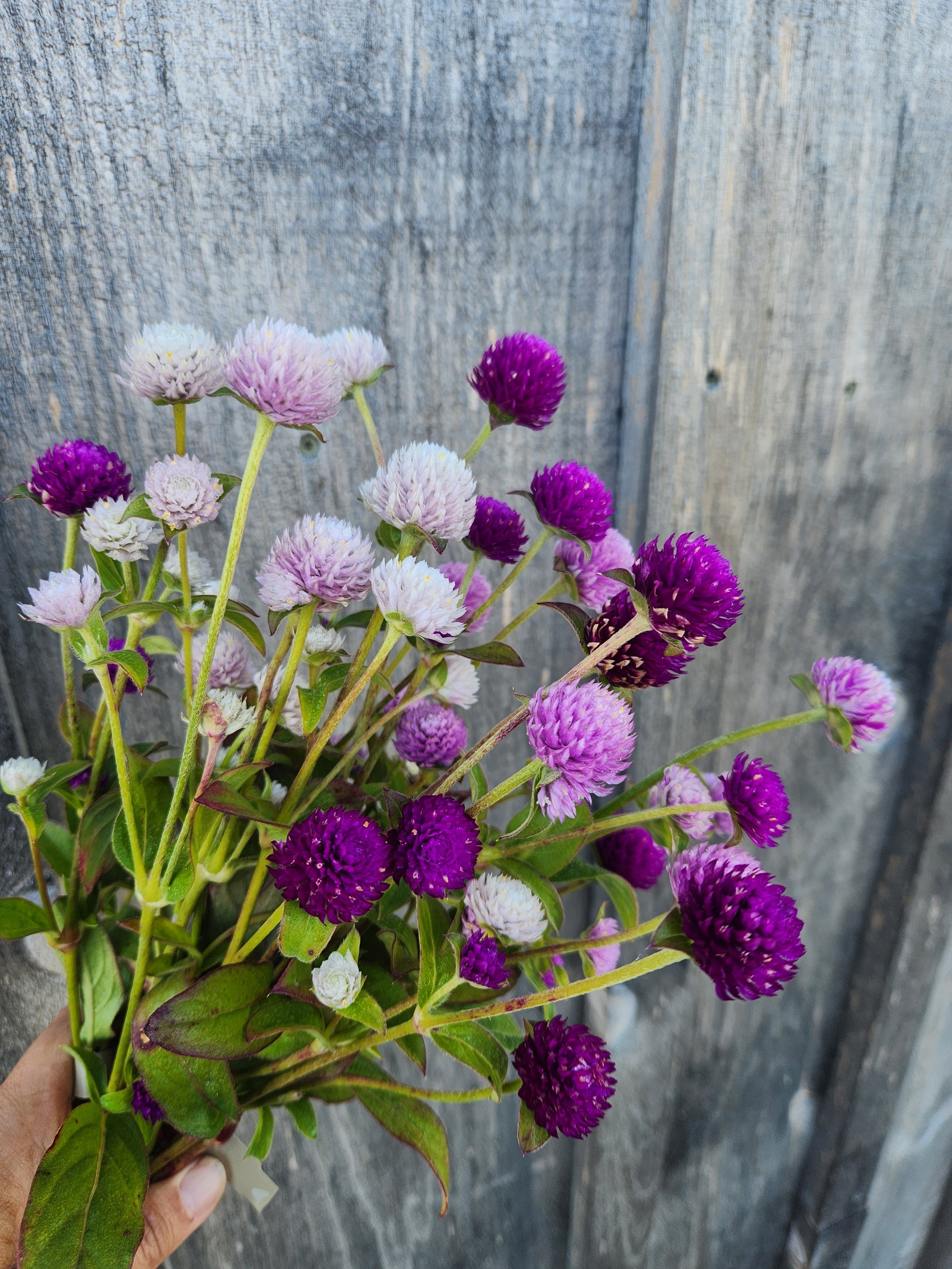
Every time I see gomphrena, I think of those colorful gumdrop candies. The little round blooms look like they should be edible (don't eat them!) and somehow manage to make every bouquet feel a little happier.
Gomphrena is one of the most underrated cut flowers out there. It's not usually the flower people notice first, but it adds so much fun, texture, and whimsy to an arrangement that bouquets just don't feel quite the same without it.
And here's the best part...
You really only need a couple of plants. They'll produce flowers all summer long.
How to Grow Gomphrena
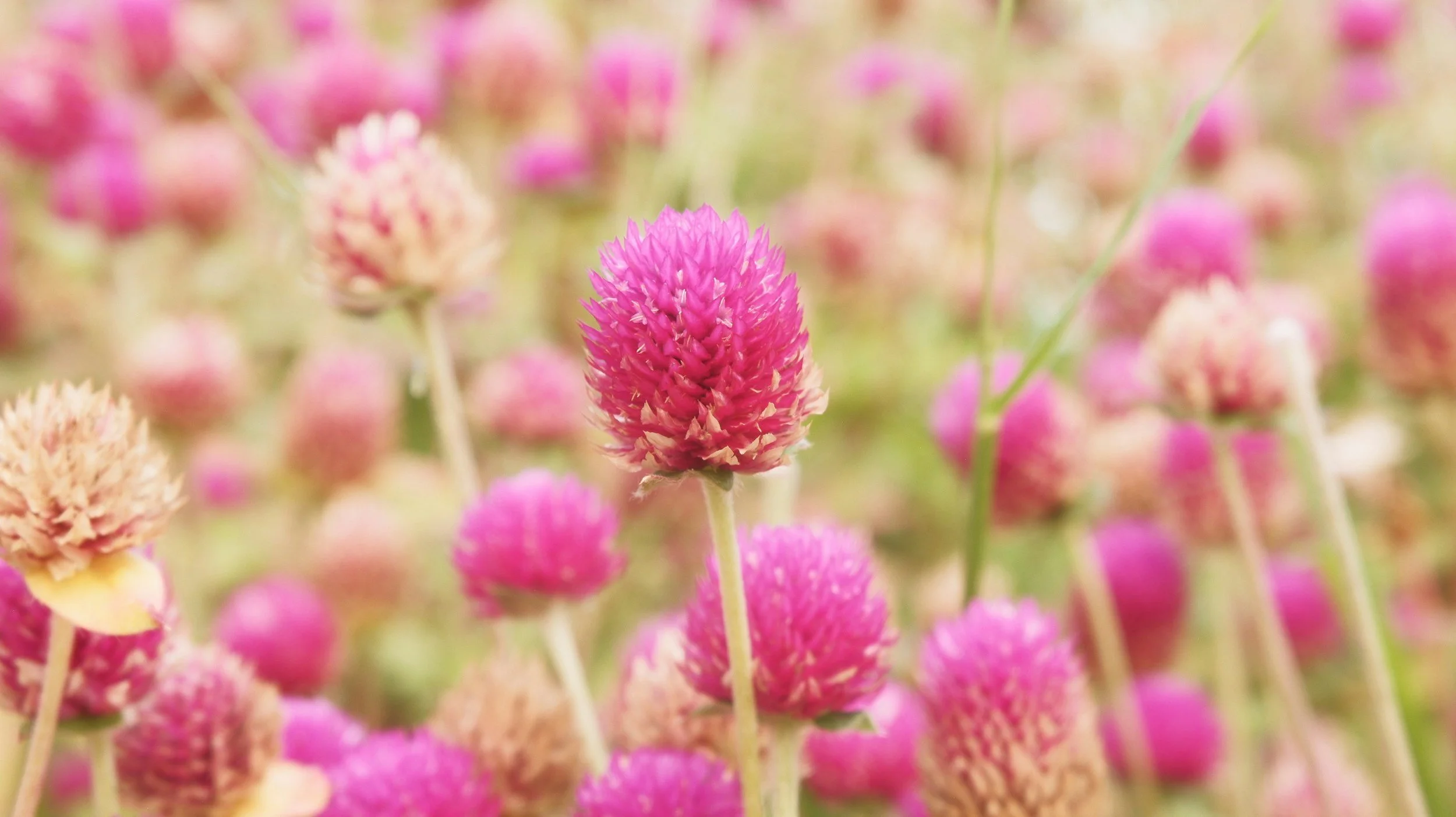
Gomphrena absolutely loves summer.
The hotter it gets, the happier it seems to be.
If you've struggled finding flowers that thrive during those hot July afternoons, gomphrena is your friend.
Planting
Plant after all danger of frost has passed.
Choose a location with full sun.
Space plants about 9 to 12 inches apart.
Water regularly until plants become established.
Once they're growing, they're surprisingly drought tolerant and incredibly easy to care for.
Pinching Gomphrena
Yes...
This is another flower I'm going to tell you to pinch.
When plants are about 6 to 8 inches tall, remove the center growing stem.
I know.
It feels mean.
But that one little pinch encourages the plant to branch into a beautiful, bushy plant covered with flowers instead of growing one tall stem.
You'll end up with:
More blooms
Better branching
Longer stems
A much larger harvest
Future you will be glad you did it.
Colors of Gomphrena
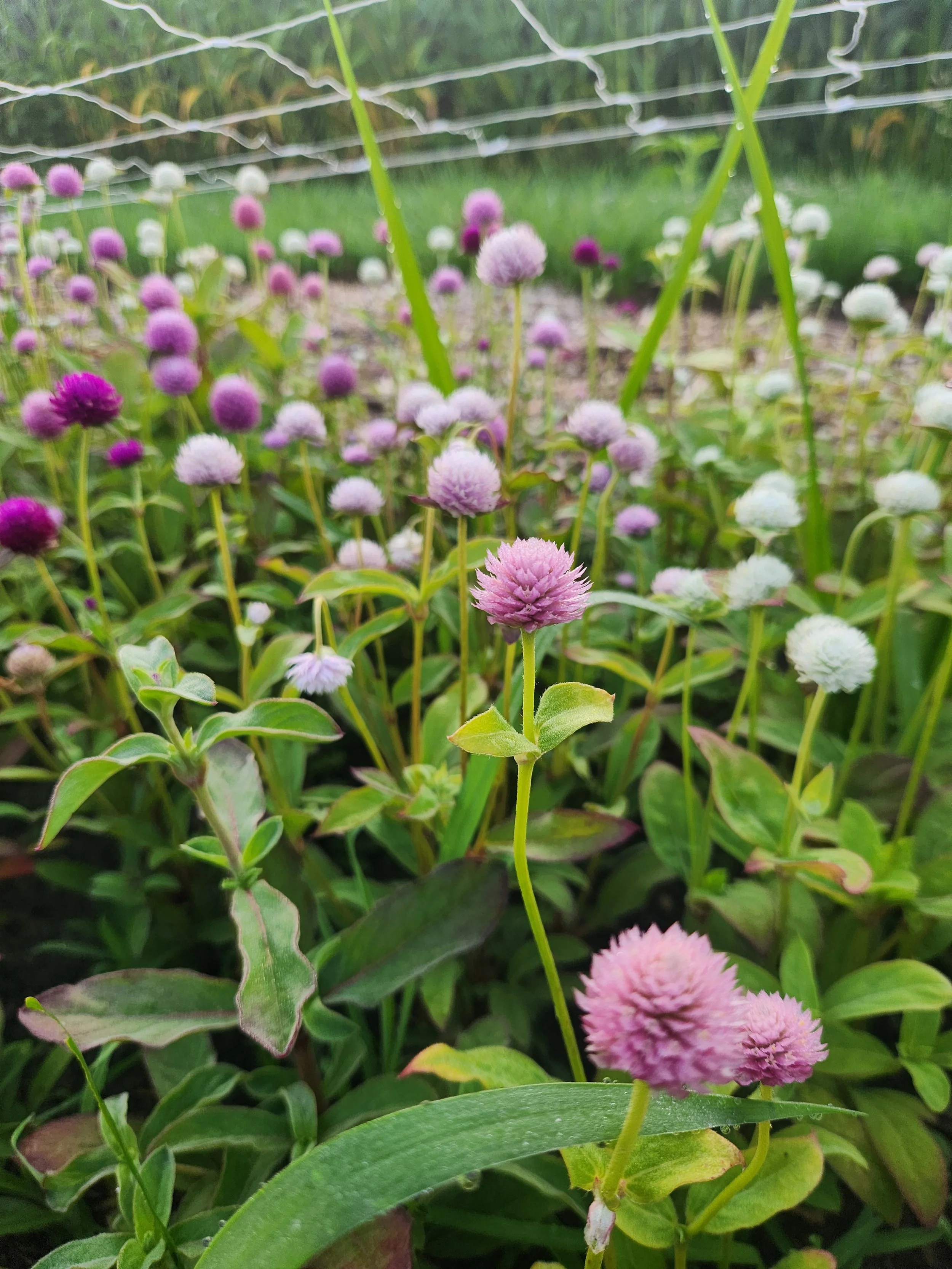
Gomphrena comes in beautiful shades of:
White
Pink
Hot pink
Lavender
Purple
Red
Mix a few colors together and you'll quickly see why florists love them.
They're like little pops of confetti tucked throughout a bouquet.
When to Harvest Gomphrena
Harvest gomphrena once the flowers are fully colored and feel firm.
Give the bloom a gentle squeeze.
If it still feels soft, let it mature a little longer.
Once the flower feels firm and papery, it's ready to cut.
The more you harvest, the more flowers your plants will produce.
Conditioning Gomphrena
Conditioning simply means allowing flowers to fully hydrate after harvest before arranging them.
After cutting:
Remove the lower leaves.
Place stems immediately into clean water.
Allow them to rest in a cool location for several hours.
Gomphrena has an excellent vase life and holds up beautifully once properly conditioned.
Drying Gomphrena
This is where gomphrena really shines.
It's one of the best dried flowers you can grow.
Simply:
Strip the leaves.
Gather stems into small bundles.
Hang them upside down in a dry location with good airflow.
That's it.
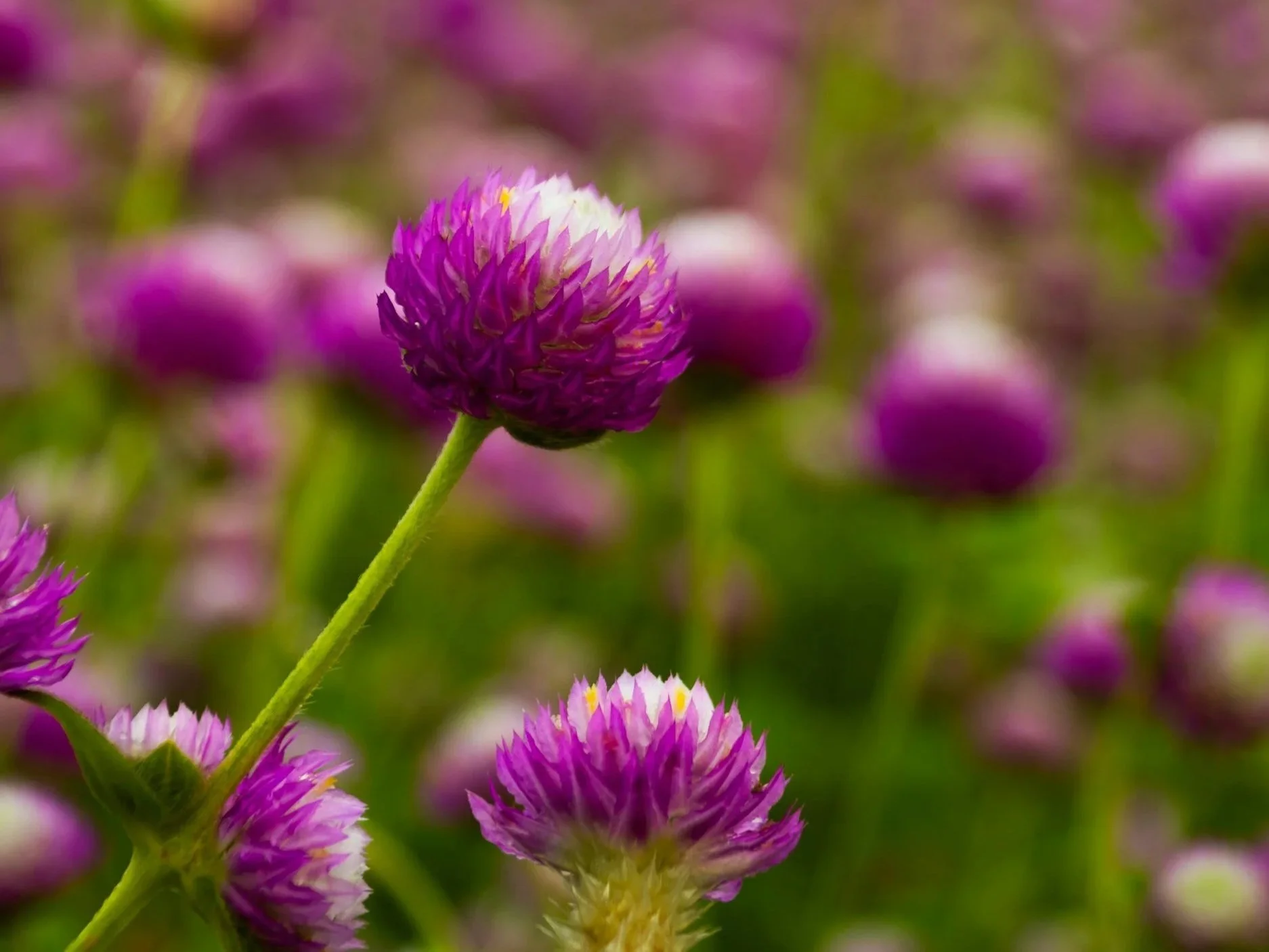
When they're dry, they look almost exactly like they did the day you picked them.
Their color stays vibrant, the little blooms keep their shape, and they last for months.
They're perfect for:
Everlasting bouquets
Wreaths
Dried flower arrangements
Holiday decorating
Craft projects
They're one of those flowers you'll tuck into a dried bouquet in October... and still be enjoying in March.
Why I Love Gomphrena
Gomphrena is proof that the smallest flowers often make the biggest difference.
It's cheerful, productive, heat-loving, incredibly easy to grow, and one of the best dried flowers you'll ever plant.
The funny name might make people laugh.
The gumdrop-shaped blooms might make them smile.
But once they see what gomphrena brings to a bouquet, they'll wonder how they ever gardened without it.
Ready to Grow a More Beautiful Cutting Garden?
If you're dreaming of armloads of flowers but aren't quite sure what to grow, where to plant them, or how to put it all together, I'd love to help.
Download my free guide:
The Ultimate Guide to Planning, Creating, and Designing Your Cut Flower Garden.
Inside you'll discover:
My favorite cut flowers for beginners
How to plan a cutting garden that blooms all season
Tips for designing beautiful bouquets from your own backyard
Common mistakes that are easy to avoid
As a bonus, you'll also receive my weekly gardening emails full of practical growing tips, seasonal reminders, behind-the-scenes updates from Long River Family Farm, and first access to plant sales, workshops, and new resources.
Click below to get your free guide and start growing with confidence!
Happy gardening!
I hope this guide gives you the confidence to grow flowers you can't wait to bring inside. Gardening is always an adventure, and I'm so glad you're here.
Your flower-farming friend,
Michelle
Long River Family Farm