How to grow: Snapdragons
How to Grow Snapdragons
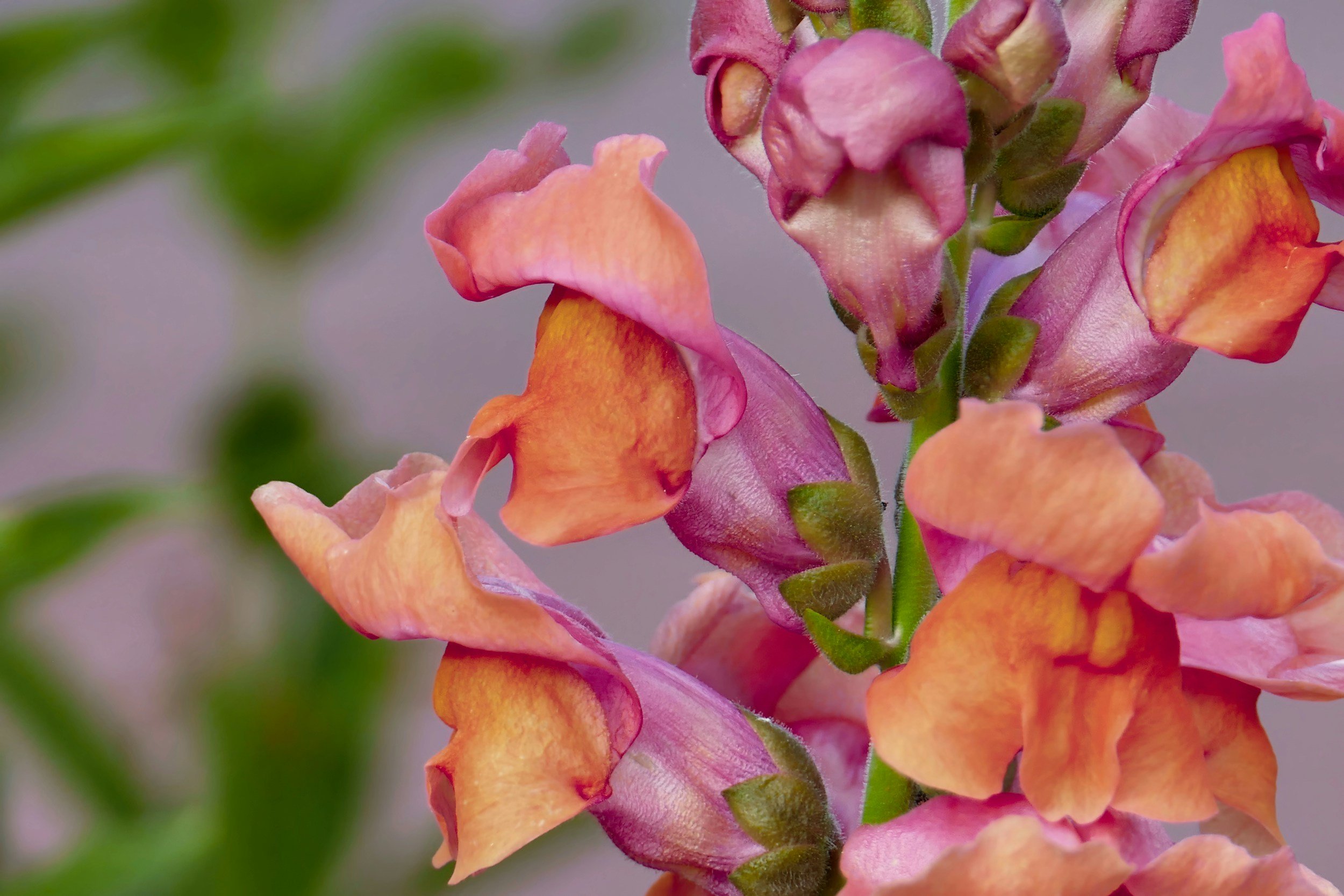
Snapdragons are what every child remembers.
I still remember my grandma showing me how to gently pinch the sides of the flower so it looked like a dragon opening and shutting its mouth. If you've never done it before, go try it. It's one of those little gardening traditions that somehow gets passed from generation to generation.
But snapdragons aren't just fun. They're also one of the most productive and versatile cut flowers you can grow.
They provide tall spikes, incredible color, and bloom during times of the season when many other flowers aren't at their best. Whether you're growing them for bouquets, pollinators, or pure nostalgia, snapdragons deserve a place in every cutting garden.
How to Grow Snapdragons
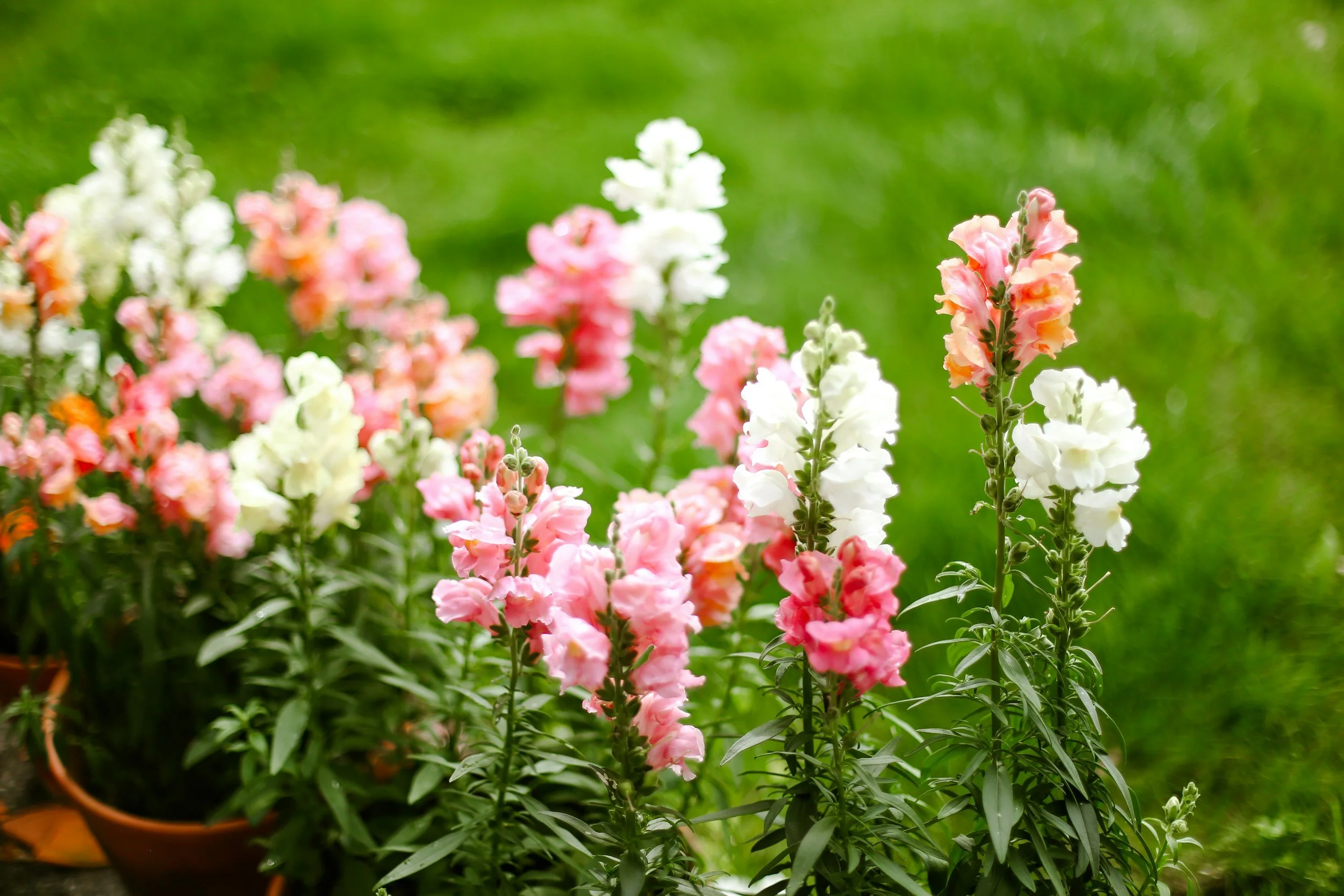
Snapdragons prefer full sun and fertile, well-drained soil.
They grow best when given consistent moisture and plenty of room for airflow.
Planting
Plant after the danger of hard frost has passed.
Space plants 6 to 9 inches apart.
Choose a sunny location.
Keep plants watered during dry periods.
One thing many gardeners don't realize is that snapdragons are grouped by their preferred growing temperatures.
Snapdragon Group Numbers
Snapdragons are classified into Groups 1 through 4.
Group 1 and 2 varieties are best suited for cool-season production.
Group 3 and 4 varieties are what most home gardeners grow for summer flowers.
Group 3 and 4 snapdragons handle warm weather much better and continue producing through the heat of summer.
Even so, don't be surprised if your snapdragons slow down a little during the hottest part of summer. Mine often take a short break during July.
The good news? They usually come roaring back when cooler fall temperatures arrive.
Pinching Snapdragons
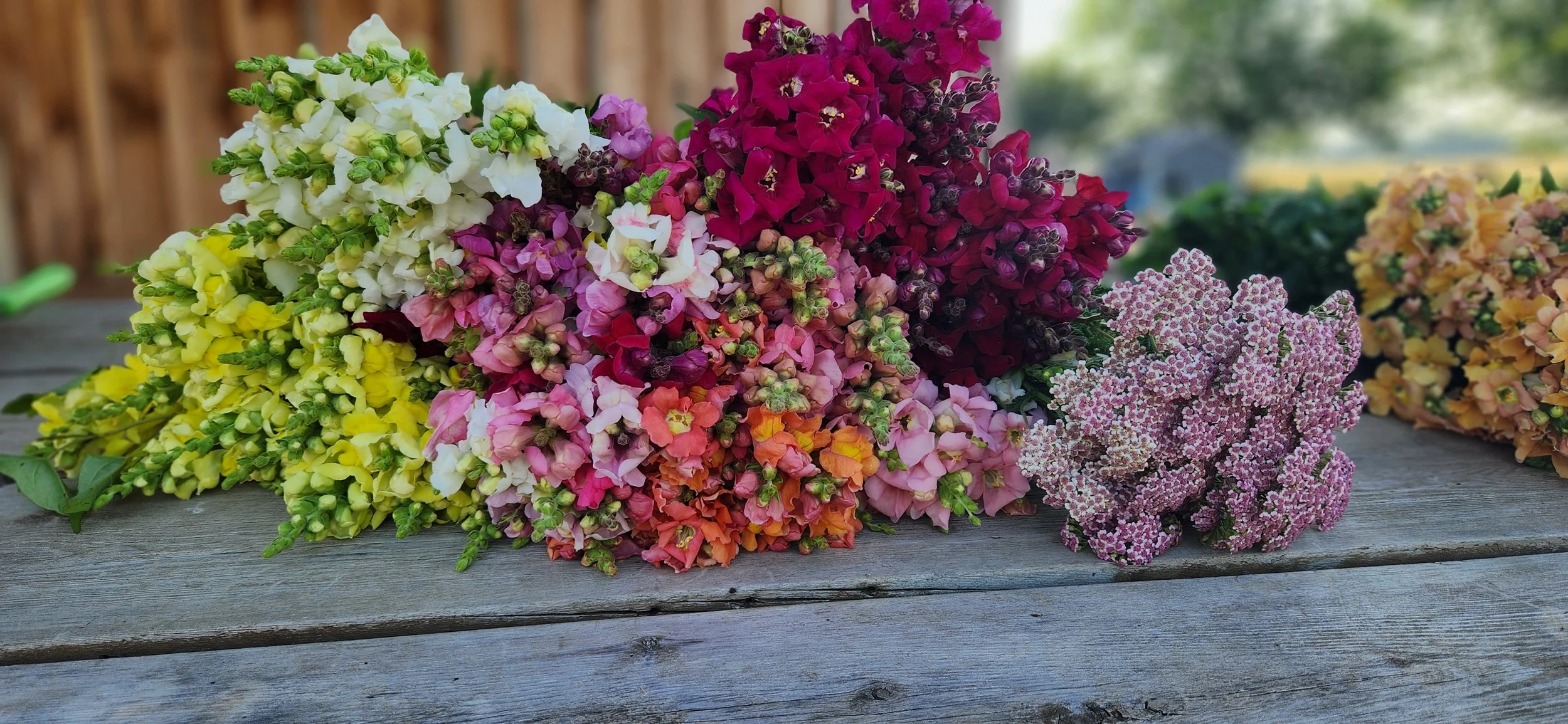
If you're growing snapdragons for cut flowers, pinching is one of the most important things you can do.
When plants are about 3 to 4 inches tall, remove the center growing stem.
I know it feels wrong.
But trust me.
Pinching encourages the plant to branch and produce multiple flowering stems instead of one large stem up the middle.
More branches means:
More flowers
Longer harvest season
Fuller plants
More stems for bouquets
Colors and Flower Types
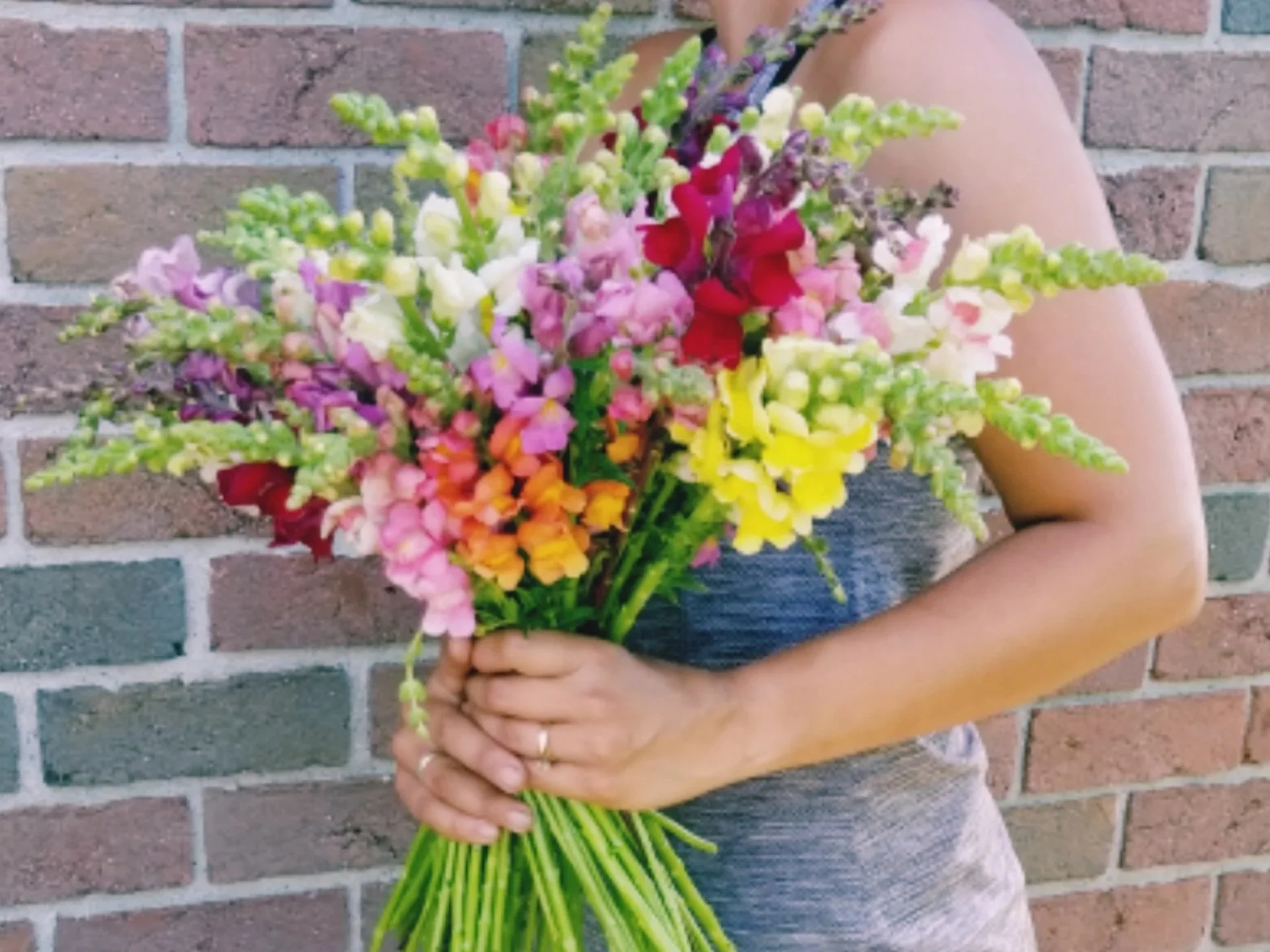
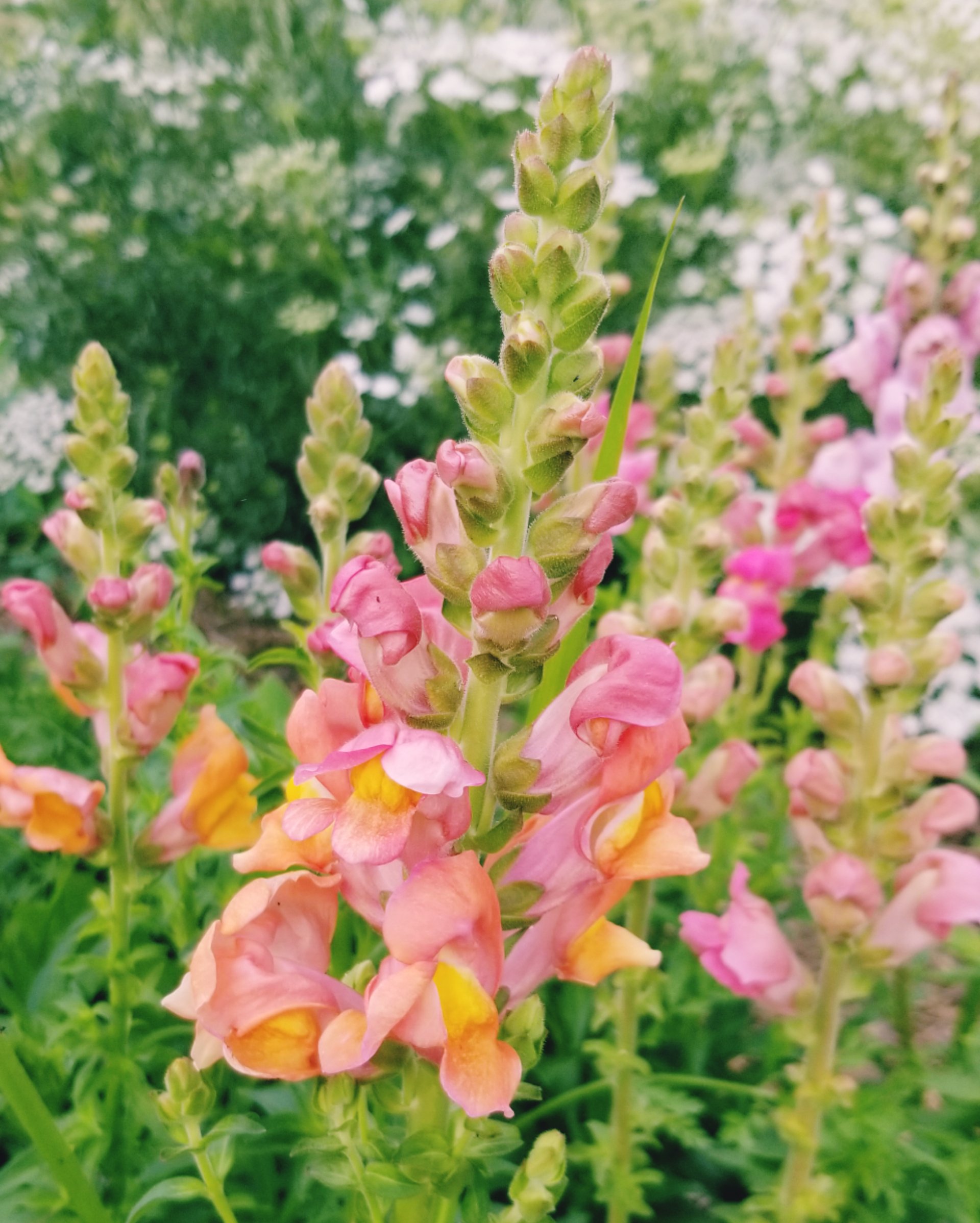
Snapdragons come in almost every color imaginable.
You'll find:
White
Cream
Yellow
Peach
Apricot
Pink
Rose
Lavender
Purple
Burgundy
Bronze
Red
There are also both classic single-flowered varieties and beautiful double-flowered varieties.
The doubles often resemble miniature azaleas or butterflies and add incredible texture to bouquets.
Supporting Snapdragons
Netting snapdragons is not optional.
It's a necessity.
Strong winds, heavy rain, or even the weight of the blooms themselves can cause stems to lean or fall over.
Once a snapdragon stem bends, there is no fixing it.
The stem will continue growing with that bend, making it difficult to use in arrangements.
Installing flower netting early gives stems the support they need to grow straight and strong.
When to Harvest Snapdragons
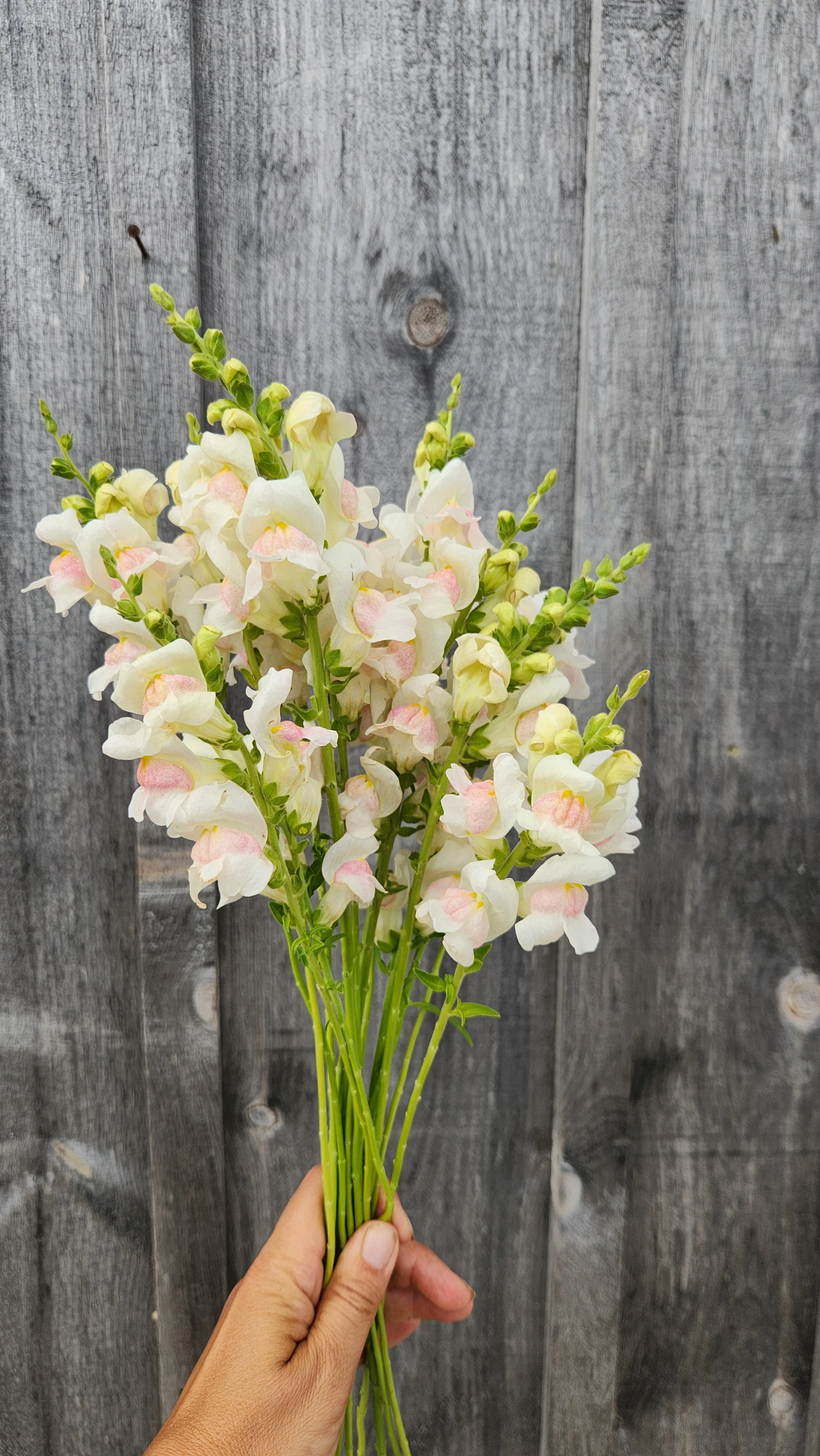
Harvest snapdragons when the lower third to half of the flowers on the spike have opened.
The remaining buds will continue opening in the vase.
Cutting at this stage gives you the longest vase life and allows customers, friends, or family to enjoy watching the flowers continue to open.
Snapdragons are a wonderful cut-and-come-again flower. The more you harvest, the more blooms they tend to produce.
Conditioning Snapdragons
Conditioning is the process of allowing flowers to fully hydrate after harvest before arranging them.
After cutting:
Remove the lower leaves.
Place stems immediately into clean water.
Allow them to rest in a cool location for several hours.
Proper conditioning helps improve vase life and keeps stems firm and hydrated.
Feeding for More Blooms
After your first major flush of flowers, give your snapdragons a boost.
A balanced fertilizer can help plants recover and encourage another round of blooms.
This is especially helpful if your plants begin slowing down during the heat of summer.
A little food and some cooler temperatures can often have them blooming beautifully again by late summer and fall.
Overwintering Snapdragons
One of my favorite things about snapdragons is how well they overwinter.
At the end of the season, leave them in the garden.
You might be surprised by what shows up next spring.
Every year I hear stories from gardeners who thought their snapdragons were gone, only to find healthy plants emerging once the weather warms up.
Some varieties overwinter better than others, and success depends on your winter conditions, but it's absolutely worth trying.
Will every plant survive?
Probably not.
Will some surprise you?
Quite possibly.
And honestly, those surprise snapdragons in spring feel like finding a little gift waiting in the garden.
Give it a try. You just might discover that your snapdragons have one more trick up their sleeve. 🌸🐉