How to Grow: Cosmos
How to Grow: Cosmos
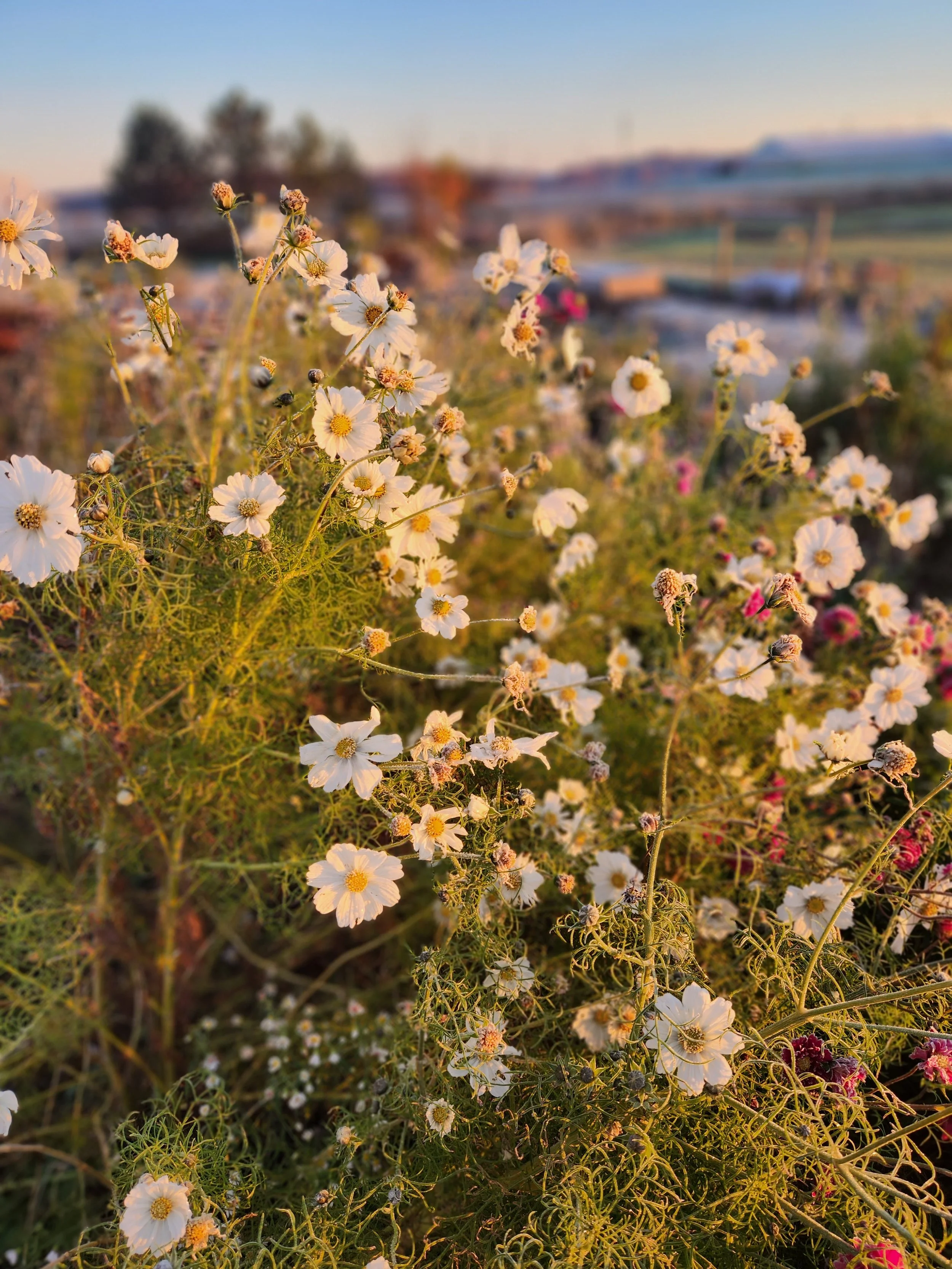
Cosmos are one of the easiest flowers you can grow, and somehow they manage to look elegant while doing it.
Their airy foliage and delicate blooms add a whimsical touch to any garden or bouquet. They dance in the breeze, attract pollinators, and seem to bloom endlessly once they get started.
The best part? You don't need many.
Just a few cosmos plants can provide armloads of flowers all season long. They're one of the highest-producing flowers in my garden and earn their space every single year.
How to Grow Cosmos
Cosmos thrive in full sun and actually prefer average soil.
In fact, if you pamper them too much with rich soil or excessive fertilizer, you'll often end up with lots of foliage and fewer flowers.
Planting
Plant after all danger of frost has passed.
Choose a location with full sun.
Space plants about 9 to 12 inches apart.
Water regularly while plants become established.
Once they're growing, cosmos are surprisingly drought tolerant and easy to care for.
Pinching Cosmos
If there is one thing you remember about growing cosmos, let it be this:
Pinch them.
Otherwise, you'll end up with one giant stem shooting straight up the middle.
I know it's hard.
Every gardener looks at a healthy young cosmos plant and thinks, "Maybe I'll skip it this year."
Don't.
Just do the hard thing and pinch them.
When plants are about 8 to 12 inches tall, remove the center growing stem.
This encourages the plant to branch, creating:
More flowers
More usable stems
A longer harvest season
Better-shaped plants
Most importantly, you get manageable stems for bouquets instead of one enormous stem that's difficult to work with.
Colors of Cosmos
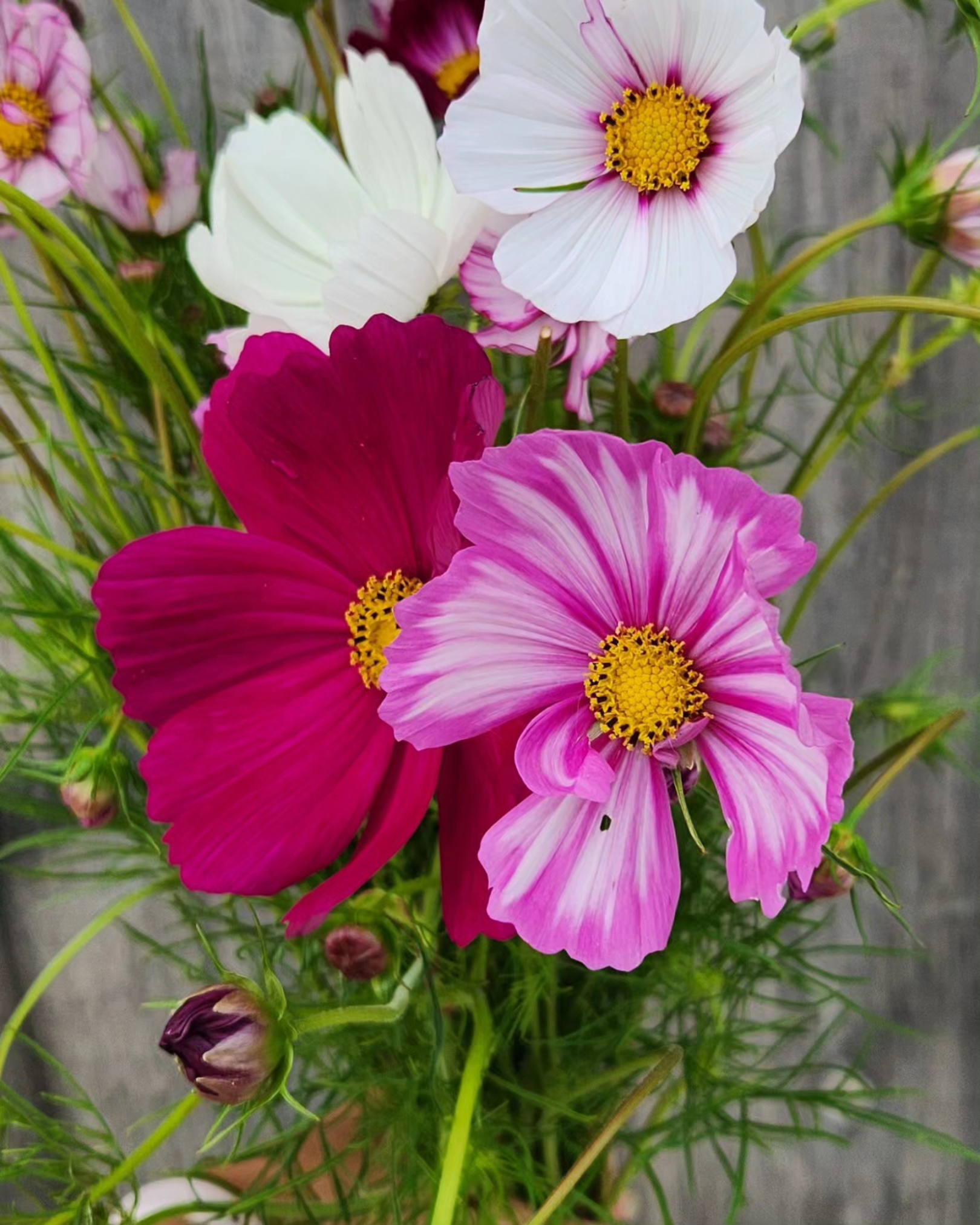
Cosmos come in an incredible range of colors, including:
White
Blush
Soft pink
Bright pink
Magenta
Rose
Burgundy
Apricot
Peach
Chocolate tones
Bi-colors
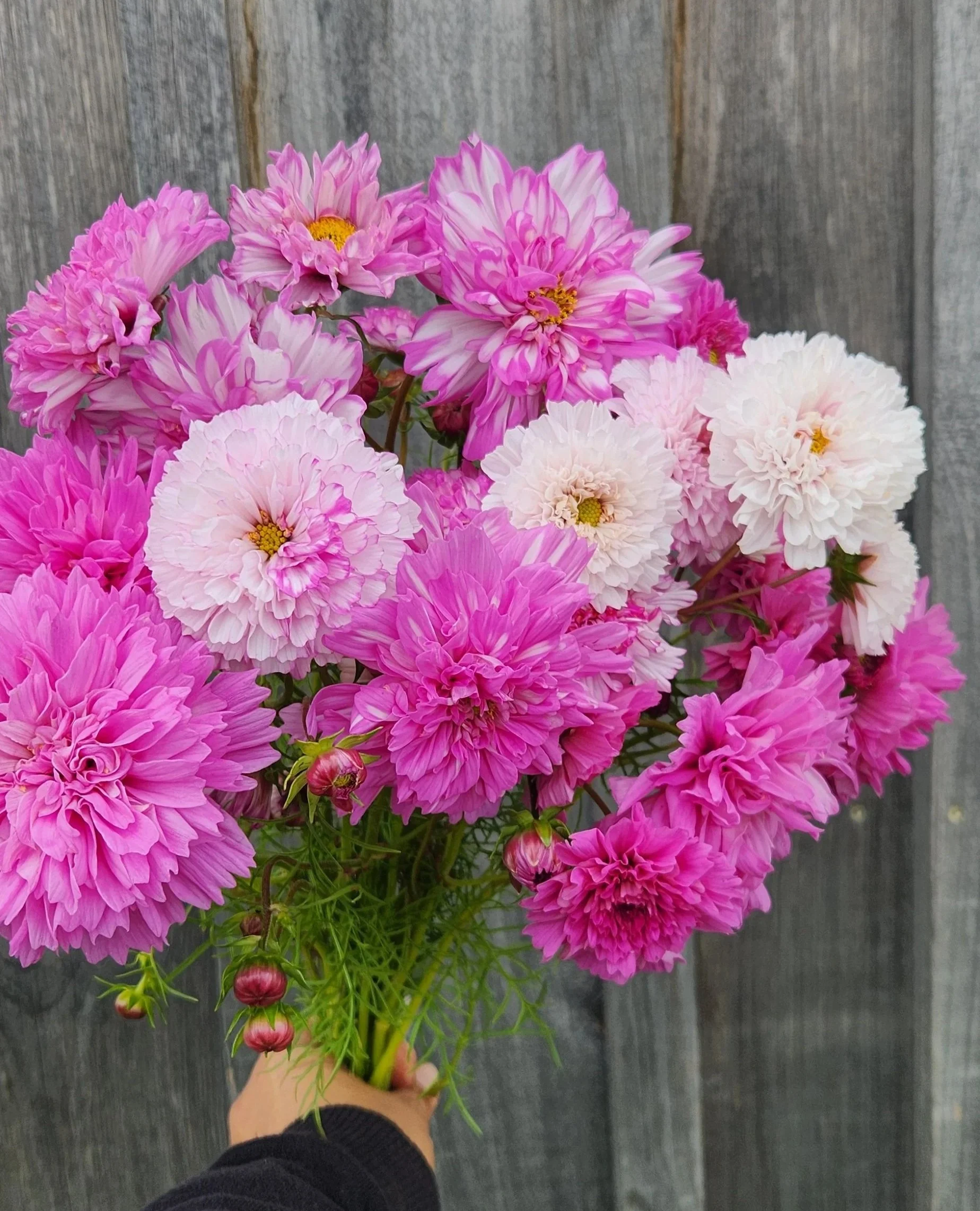
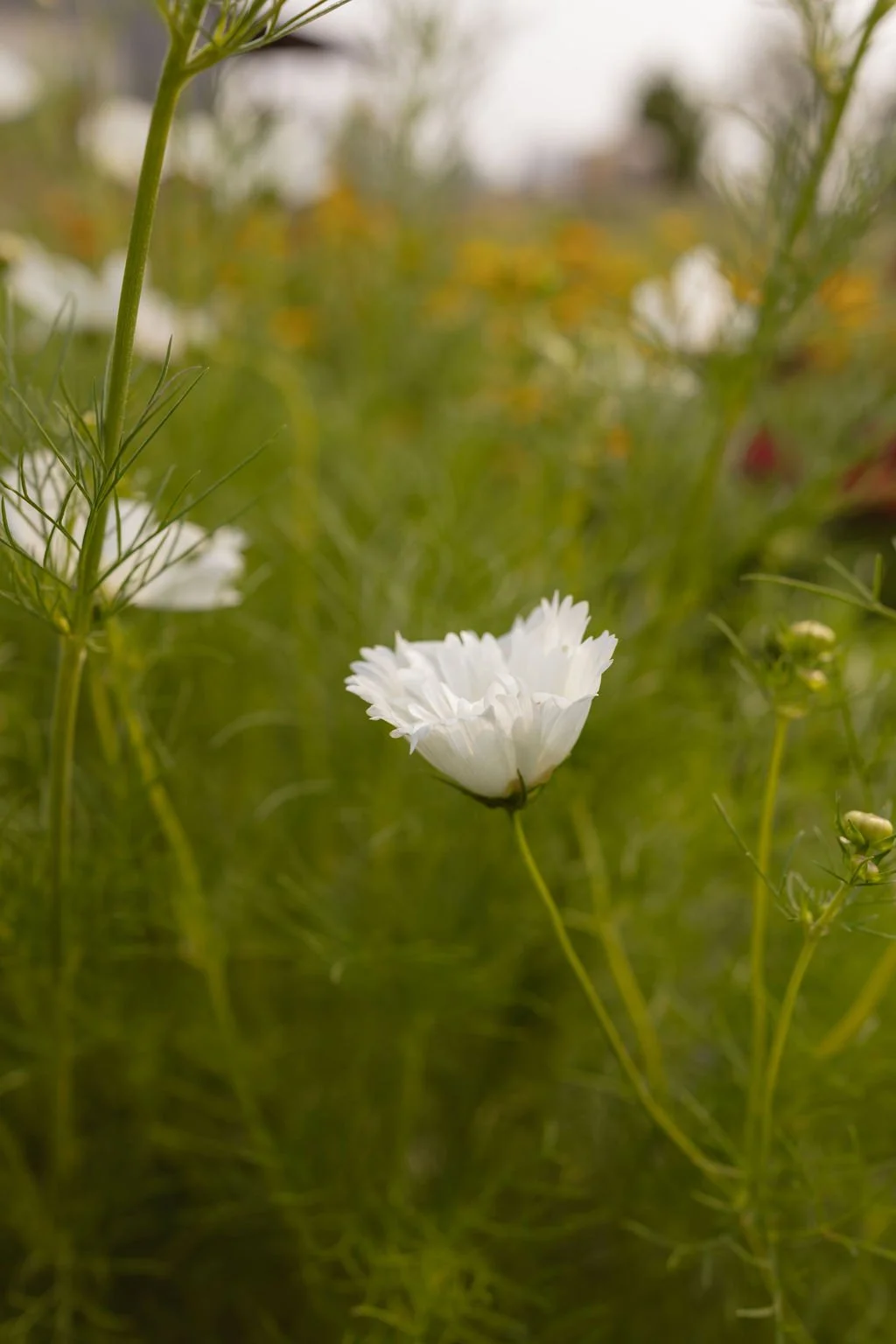
There are single-flowered varieties, semi-double varieties, and fully double blooms that look almost like tiny peonies.
No matter the color, they all bring that same light, airy feeling to the garden.
Supporting Cosmos
Most cosmos don't require heavy support, but taller varieties often benefit from netting, especially in windy locations.
A simple layer of flower netting can prevent stems from flopping over after summer storms and keep blooms clean and upright.
When to Harvest Cosmos
Cosmos can be a little tricky to harvest.
If you wait until the flowers are fully open, they often have a shorter vase life.
Instead, harvest when the petals are just beginning to crack open from the bud.
You'll see the color emerging and the petals starting to loosen, but the flower won't be fully open yet.
This stage gives you:
Longer vase life
Stronger stems
Flowers that continue opening beautifully indoors
Once you learn what that perfect harvest stage looks like, you'll never forget it.
Conditioning Cosmos
Conditioning simply means allowing flowers to fully hydrate after harvest before arranging them.
After cutting:
Remove any leaves that would sit below the water line.
Place stems immediately into clean water.
Allow them to rest in a cool location for several hours.
Proper conditioning helps maximize vase life and keeps blooms looking fresh.
Saving Seed
Cosmos are one of the easiest flowers to save seed from.
Allow a few flowers to mature and dry on the plant. The seeds are long, dark, and easy to collect.
They're also enthusiastic self-seeders.
Leave a few plants standing in the fall, and you may find surprise cosmos popping up throughout your garden next spring.
Why I Love Cosmos
If I could only grow a handful of flowers for bouquets, cosmos would be near the top of the list.
They're productive, easy to grow, and bring a softness that few flowers can match.
A single stem can transform an arrangement from pretty to magical.
And with just a few plants, you'll have more flowers than you know what to do with all summer long. 🌸