
How to Grow: Sunflowers
How to Grow: Sunflowers
Is there any flower more cheerful than a sunflower?
They instantly make people smile.
Kids love them. Pollinators love them. Florists love them. And gardeners love them because they're one of the easiest flowers you can grow.
One of my favorite things about sunflowers is watching them follow the sun. Young sunflower plants actually turn their heads throughout the day, tracking the sunlight from east to west. It's one of those little garden miracles that never gets old.
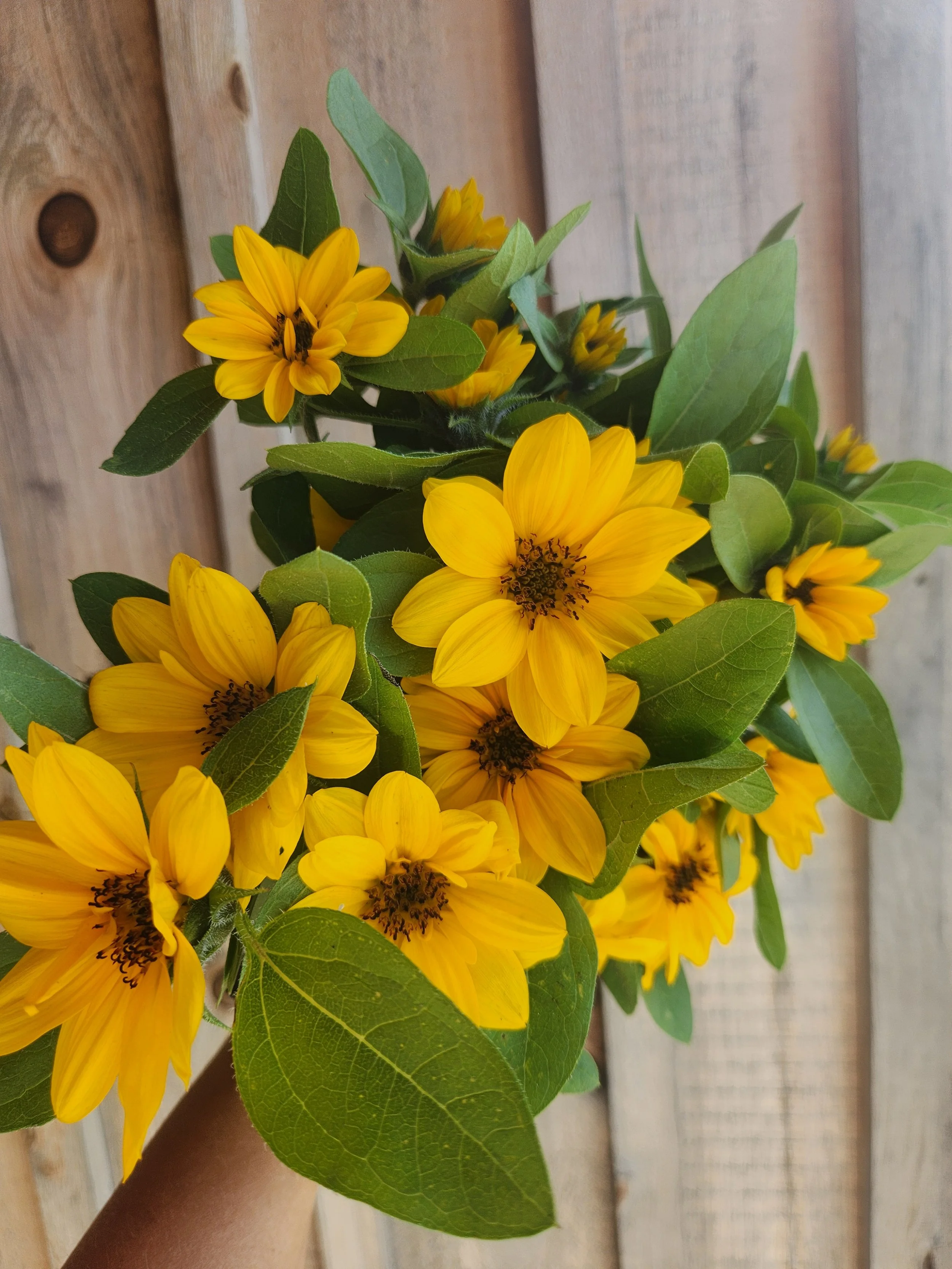
And while most people picture giant sunflowers towering over the garden, many cut flower varieties are much smaller and absolutely perfect for bouquets.
I've grown sunflower heads that were only a couple inches across. They were adorable and honestly didn't even look like what most people think of as a sunflower.
How to Grow Sunflowers
Sunflowers are incredibly easy to grow and thrive in full sun.
I recommend direct sowing them right into the garden whenever possible.
Planting
Plant after danger of frost has passed.
Sow seeds directly into the garden.
Plant every 3 to 4 inches apart, or plant 2 seeds every 6 inches.
Water regularly until established.
For cut flowers, closer spacing is actually a good thing.
The closer you plant sunflowers together, the smaller the flower heads become.
That's exactly what we want for bouquets.
Instead of giant dinner-plate flowers, you'll get manageable blooms that fit beautifully into arrangements.
For continuous blooms all summer, sow 10 to 15 seeds every couple of weeks.
This simple succession planting keeps fresh flowers coming all season long.
Deer, Rabbits, Birds, and Squirrels
If you have deer or rabbit pressure, you may want to start sunflowers in trays and transplant them once they're a little larger.
Young seedlings can be irresistible to hungry critters.
Honestly, though, it's often the birds and squirrels that cause the biggest headaches. They seem to know exactly where those seeds are planted and sometimes dig them up before they even get a chance to sprout.
Single-Stem vs. Branching Sunflowers
Not all sunflowers grow the same way.
Single-Stem Varieties
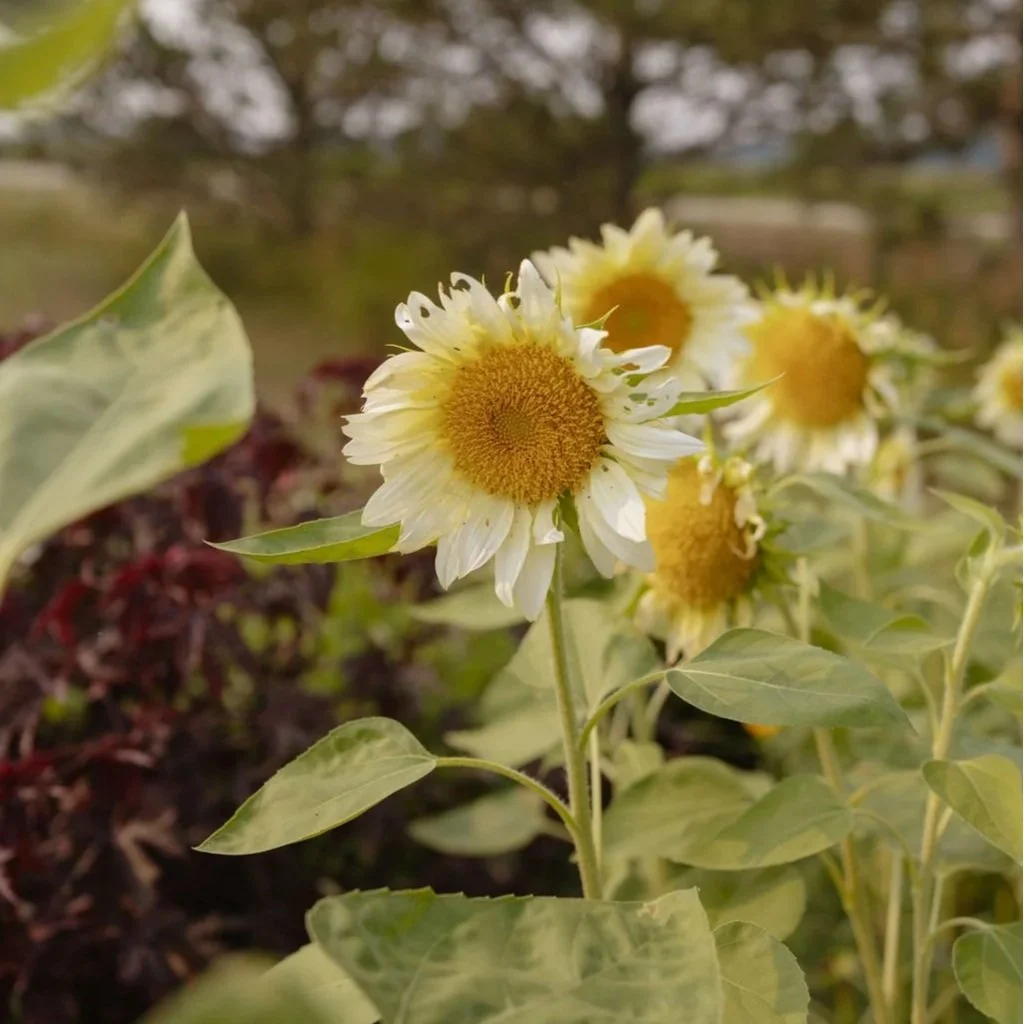
I grow primarily ProCut sunflowers.
ProCuts are single-stem varieties, meaning one plant produces one flower.
The good news is they grow fast, are extremely productive, and produce beautiful florist-quality blooms.
Since they're one flower per stem, they're perfect for succession planting every few weeks.
Branching Varieties
Branching sunflowers produce multiple blooms from a single plant.
If you're growing branching varieties, you'll want to pinch them.
When plants are about a foot tall, remove the center growing stem.
This encourages the plant to branch lower down and produce:
More flowers
Smaller blooms
Better bouquet-sized stems
Stronger branching structure
Otherwise, you'll end up with one giant flower up the middle and a handful of much smaller side blooms.
Colors and Flower Types
Most people think sunflowers only come in yellow.
Not even close.
Today you can find sunflowers in:
White
Cream
Peach
Lemon yellow
Golden yellow
Orange
Rust
Red
Burgundy
Chocolate
Lime green
Beautiful bi-colors
They also come in a variety of flower forms.
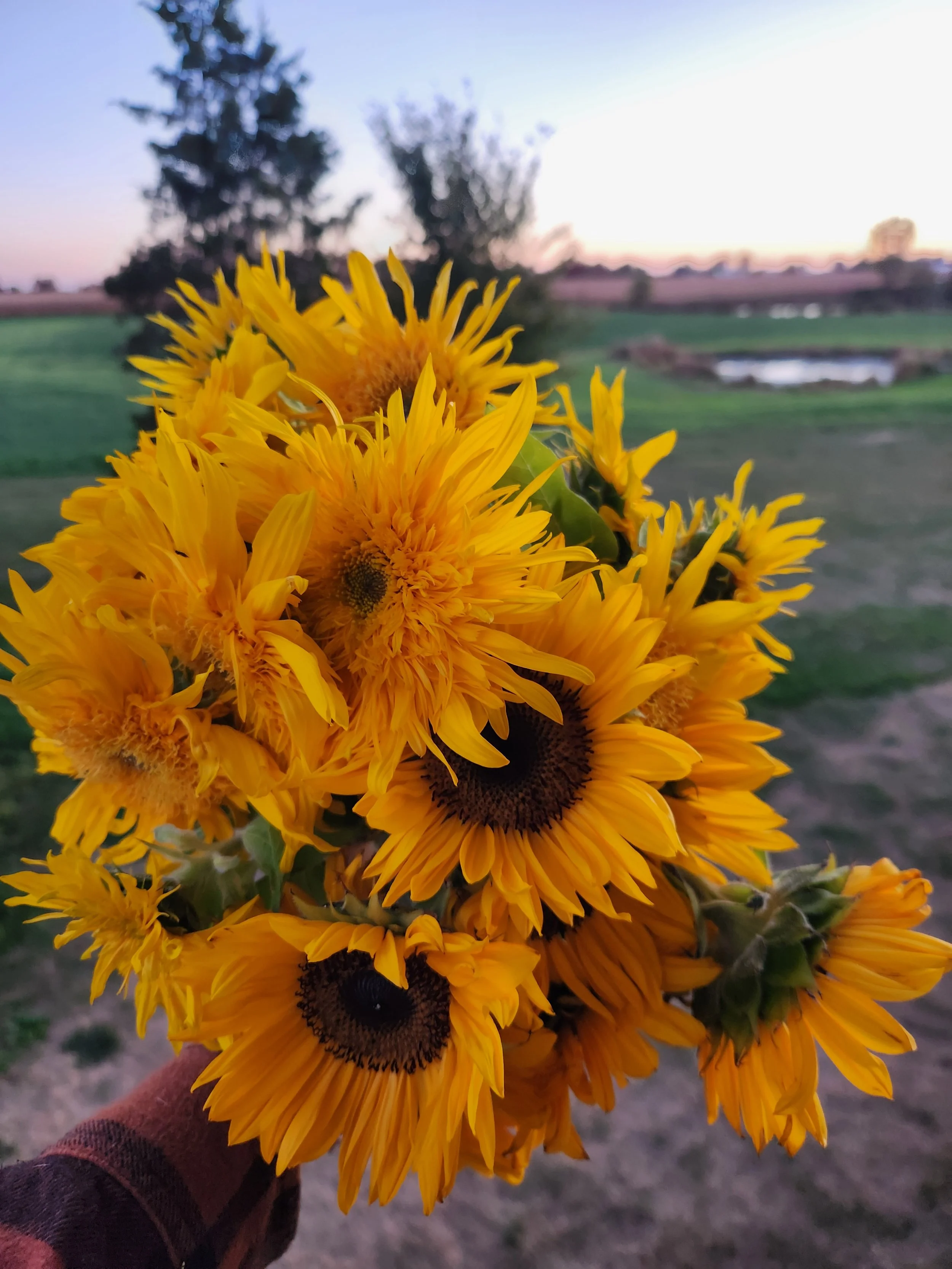
One of the most fun is the Teddy Bear sunflower.
Its fluffy petals remind me of a lion's mane and make it look completely different from a traditional sunflower.
When to Harvest Sunflowers
Harvest sunflowers when the petals are just beginning to crack open.
Don't wait until the flower is fully open.
If you do, the bugs may get there before you do.
Look for petals beginning to lift and show color around the edge of the bloom.
This stage provides:
Longer vase life
Better shipping and handling
Fewer insect issues
Flowers that open beautifully indoors
Conditioning Sunflowers
Conditioning simply means allowing flowers to fully hydrate after harvest.
After cutting:
Remove any lower leaves.
Place stems immediately into clean water.
Allow them to rest in a cool location for several hours before arranging.
Sunflowers are known as a "dirty flower," meaning they can make vase water cloudy more quickly than many other flowers.
Because of this, keeping your water clean is especially important.
Change vase water regularly and remove any foliage below the water line to help extend vase life.
Why I Love Sunflowers
Sunflowers may be one of the easiest flowers in the cutting garden, but they're also one of the most rewarding.
They're fast growing, productive, and available in far more colors and shapes than most people realize.
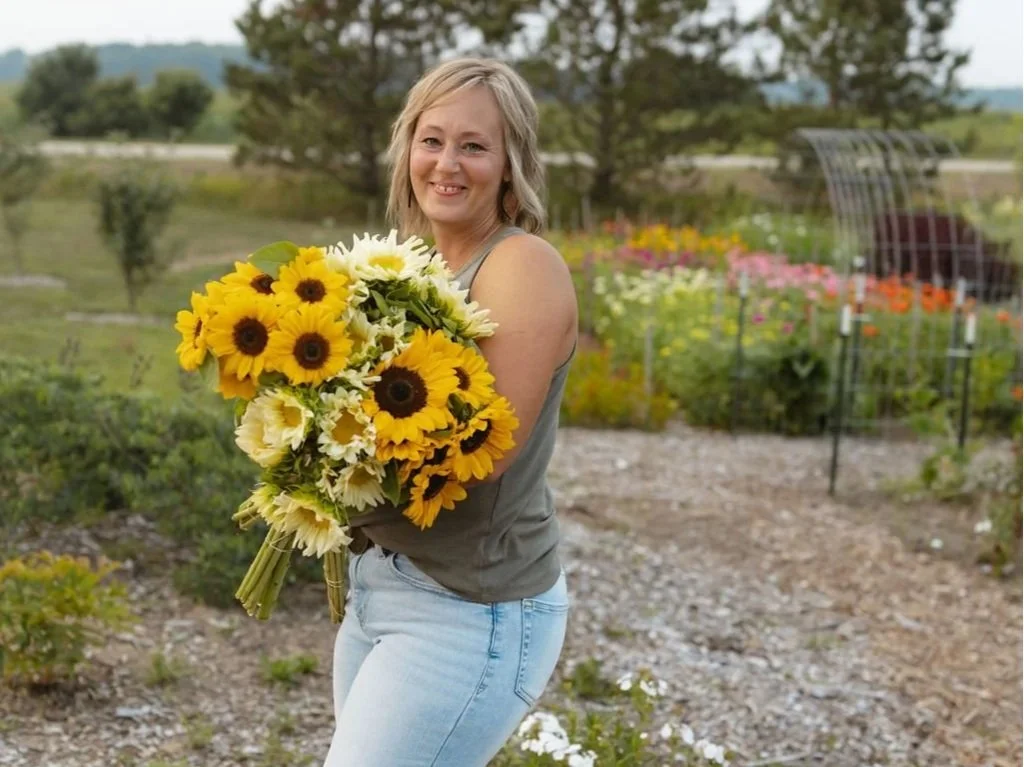
Whether you're growing tiny bouquet-sized blooms, fluffy Teddy Bears, or classic golden ProCuts, sunflowers bring a little sunshine to every arrangement.
Plant a few every couple of weeks, and you'll have cheerful blooms from summer right into fall. 🌻
Ready to Grow More Flowers?
If you love cut flowers as much as I do, make sure you grab my free guide:
The Ultimate Guide to Planning, Creating, and Designing Your Cut Flower Garden
Inside, I'll walk you through:
How many flowers you actually need
My favorite beginner-friendly cut flowers
Simple garden layouts
Tips for creating bouquets all season long
Plus, you'll get my weekly gardening emails filled with growing tips, seasonal advice, and a behind-the-scenes look at what's happening here at Long River Family Farm.
Click here to get your free guide and start planning your dream cutting garden.