
Flower Arranging Series(Part 3) The 5 Types of Flowers Every Beautiful Bouquet Needs.
Part 3 of the Flower Arranging Series:
The 5 Types of Flowers Every Beautiful Bouquet Needs
When I first started arranging flowers, I had absolutely no idea what I was doing.
Seriously.
I'd cut everything that was blooming, shove it in a vase, and hope for the best. My spike flowers ended up right in the middle, flowers were sticking out every direction, and there was nowhere for your eye to land. It wasn't ugly... but it definitely wasn't something you'd proudly put on your dining room table.
Turns out, flower arranging isn't really about having expensive flowers.
It's about having the right mix of flowers.
Whether you're making a hand-tied bouquet, arranging flowers in a vase, or creating a beautiful compote centerpiece, almost every arrangement is built from the same five ingredients.
Once you understand them, arranging flowers suddenly becomes so much easier.
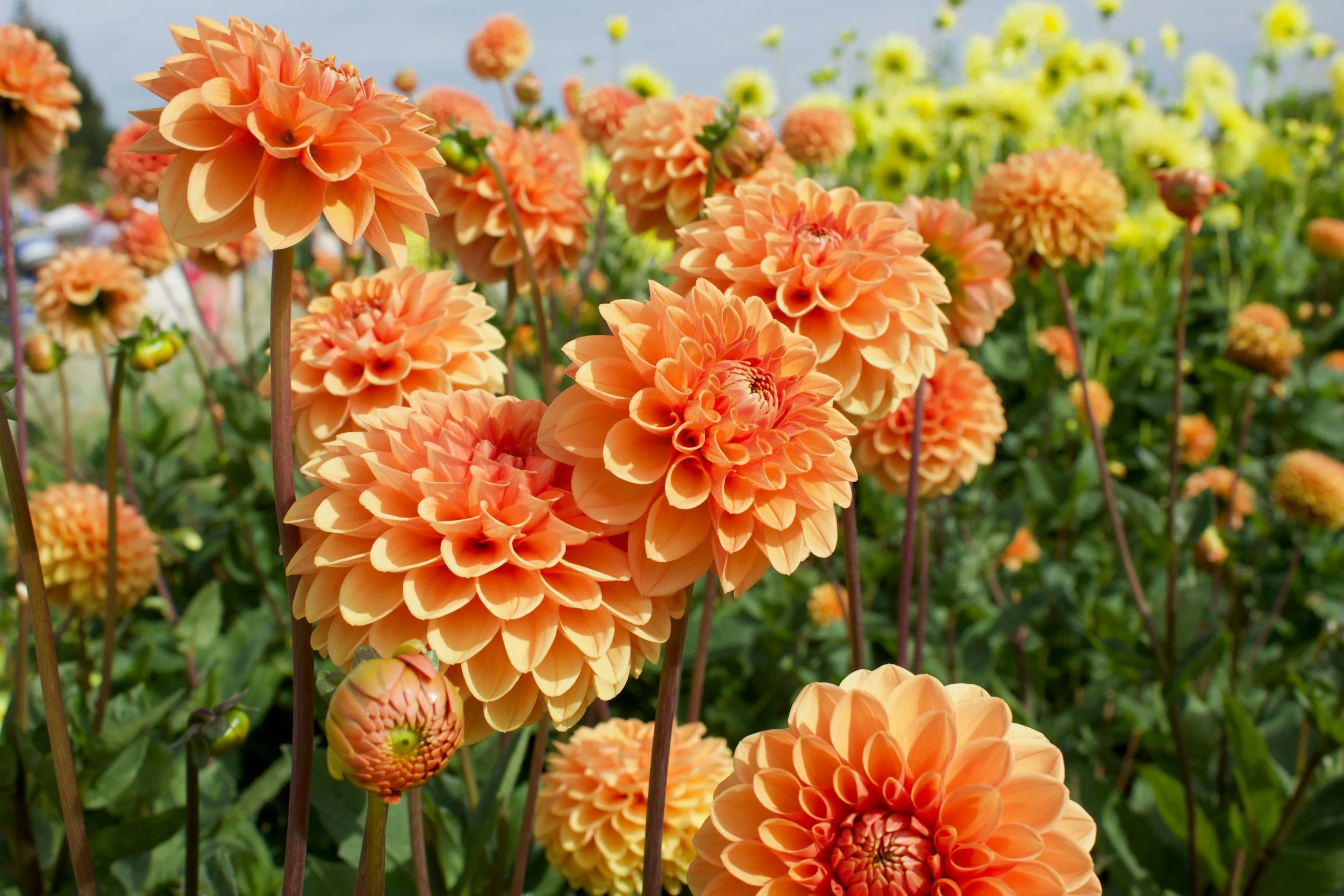
Dahlias are a favorite focal flower.
1. Focal Flowers
These are your "look at me!" flowers.
They're what your eye naturally notices first and what gives your bouquet its main personality.
Some of my favorite focal flowers are:
Zinnias
Dahlias
Sunflowers
Lisianthus
Here's something that surprised me when I first learned it...
Your focal flowers don't even have to be different varieties.
You can make an entire bouquet of zinnias and simply use the biggest blooms as your focal flowers and the smaller blooms as supporting flowers. It still works beautifully.
Speaking of sunflowers... I used to struggle using them in bouquets because so many varieties naturally droop their heads.
Now I mostly grow ProCut Horizon. They hold their heads upright, making them so much easier to arrange. I also plant mine close together so the flower heads stay smaller. Those little bouquet-sized sunflowers are some of my favorites.
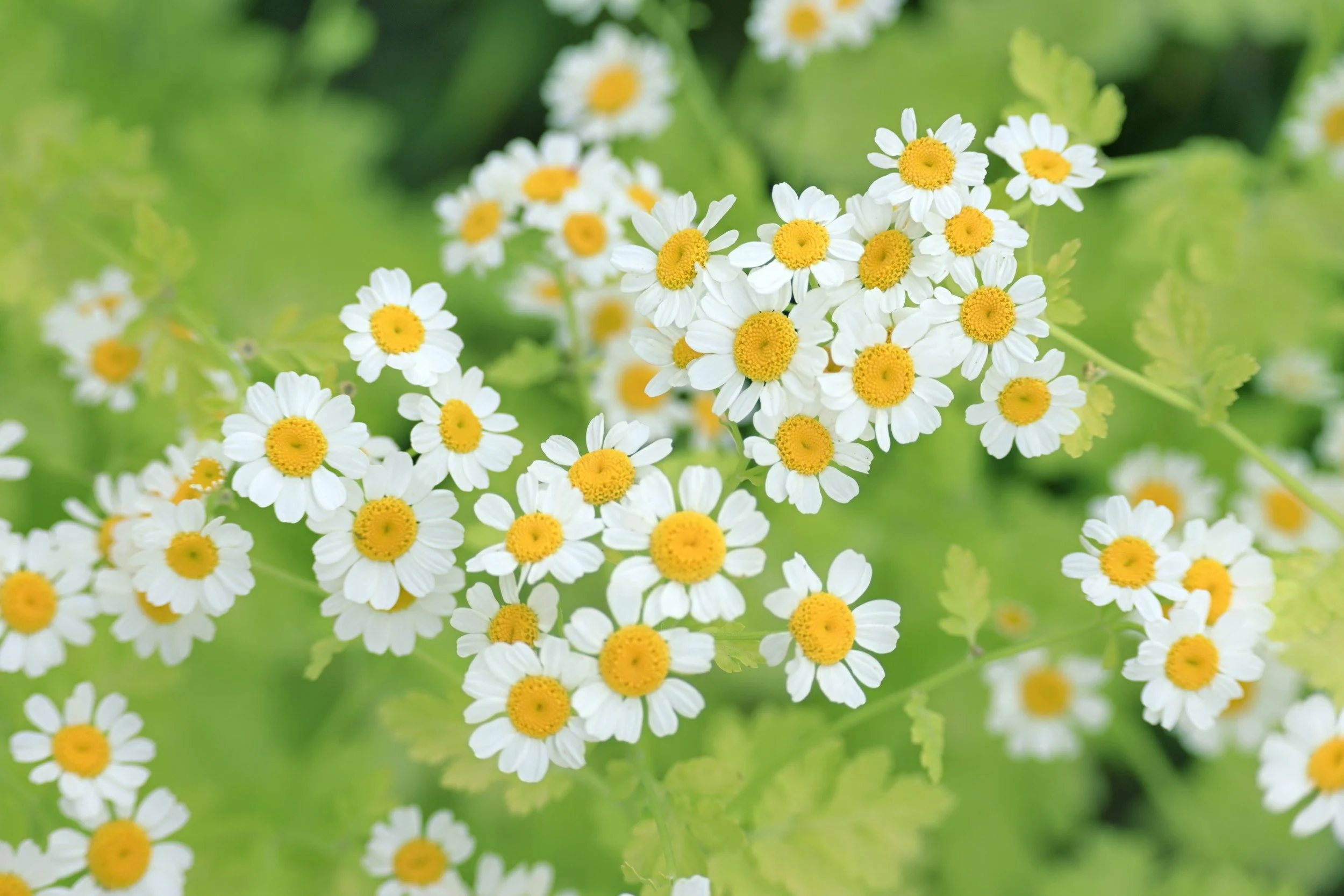
Feverfew is one of my favorites. It’s just so happy.
2. Fillers
Fillers are the flowers that connect everything together.
Without them, bouquets can look like a bunch of flowers with awkward gaps between them.
Fillers soften those spaces and make arrangements feel full.
Some of my favorites are:
Ageratum
Yarrow
Feverfew
Smaller zinnias
Queen Anne's Lace (Ammi)
They're usually not the stars of the show...
But you'd definitely notice if they weren't there.
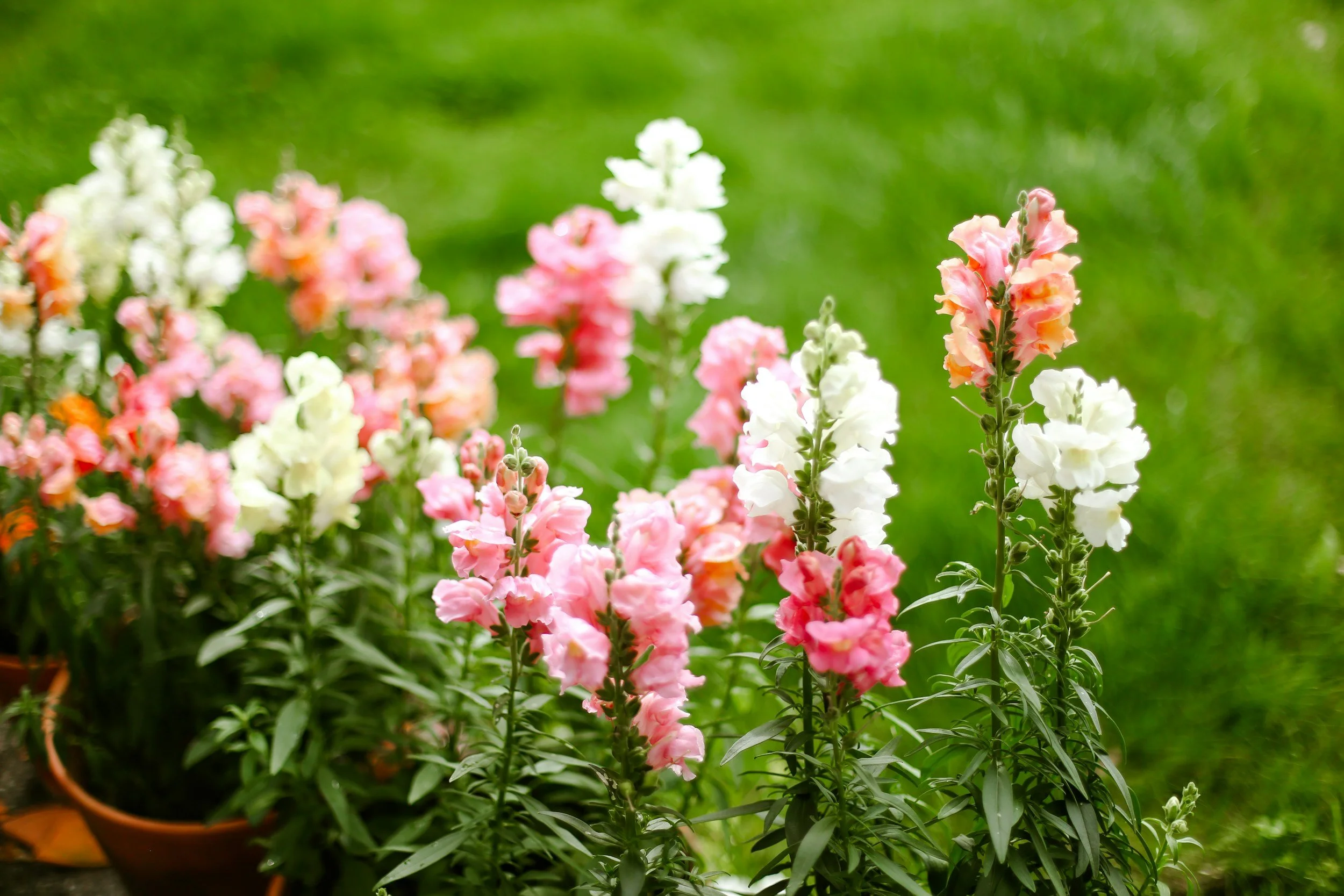
Snapdragons are the great line flowers.
3. Line (or Spike) Flowers
These flowers give your arrangement movement.
They help lead your eye through the bouquet and create height.
They're also exactly what I used wrong in my first bouquets.
I'd stick every spike flower straight up the middle like little radio antennas.
Not exactly the look I was going for.
Instead, think of spike flowers as creating gentle lines that guide your eye around the arrangement.
Some of my favorites are:
Snapdragons
Celosia
Delphinium
Foxglove
Just a few well-placed stems make a huge difference.
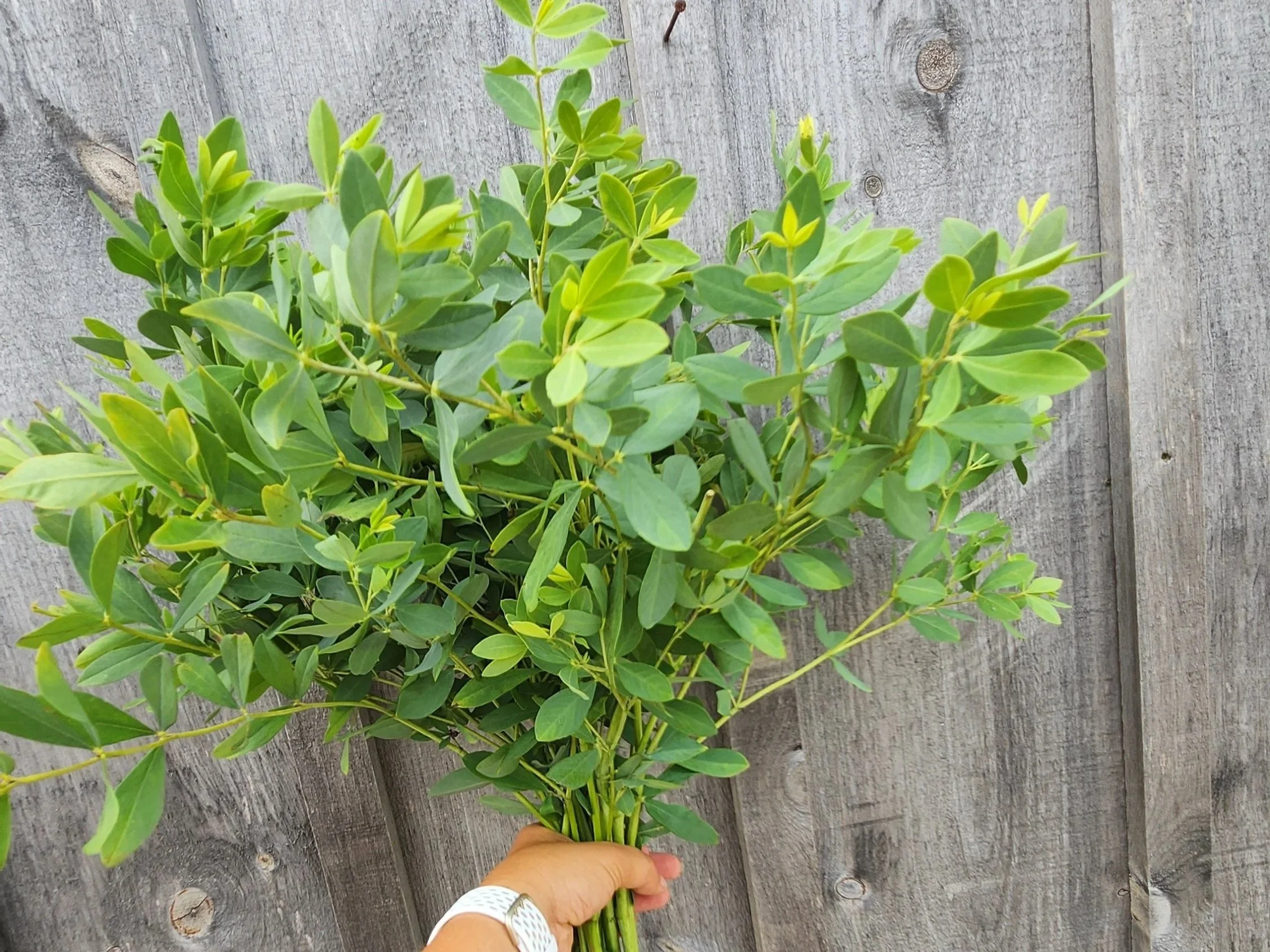
Baptisia foliage is the best. I’m in love.
4. Foliage & Greenery
Don't skip the greenery.
Seriously.
Greenery isn't just something to fill space.
It creates the framework that holds everything together.
When I teach flower arranging classes, we actually start with greenery before we add a single flower.
A little baptisia foliage, mint, or even some interesting branches creates structure and gives the bouquet somewhere to "live."
Some of my favorite greenery includes:
Baptisia foliage
Mint
Eucalyptus
Autumn Olive
Grapevine
It's amazing how much more finished an arrangement looks with just a few stems of greenery.
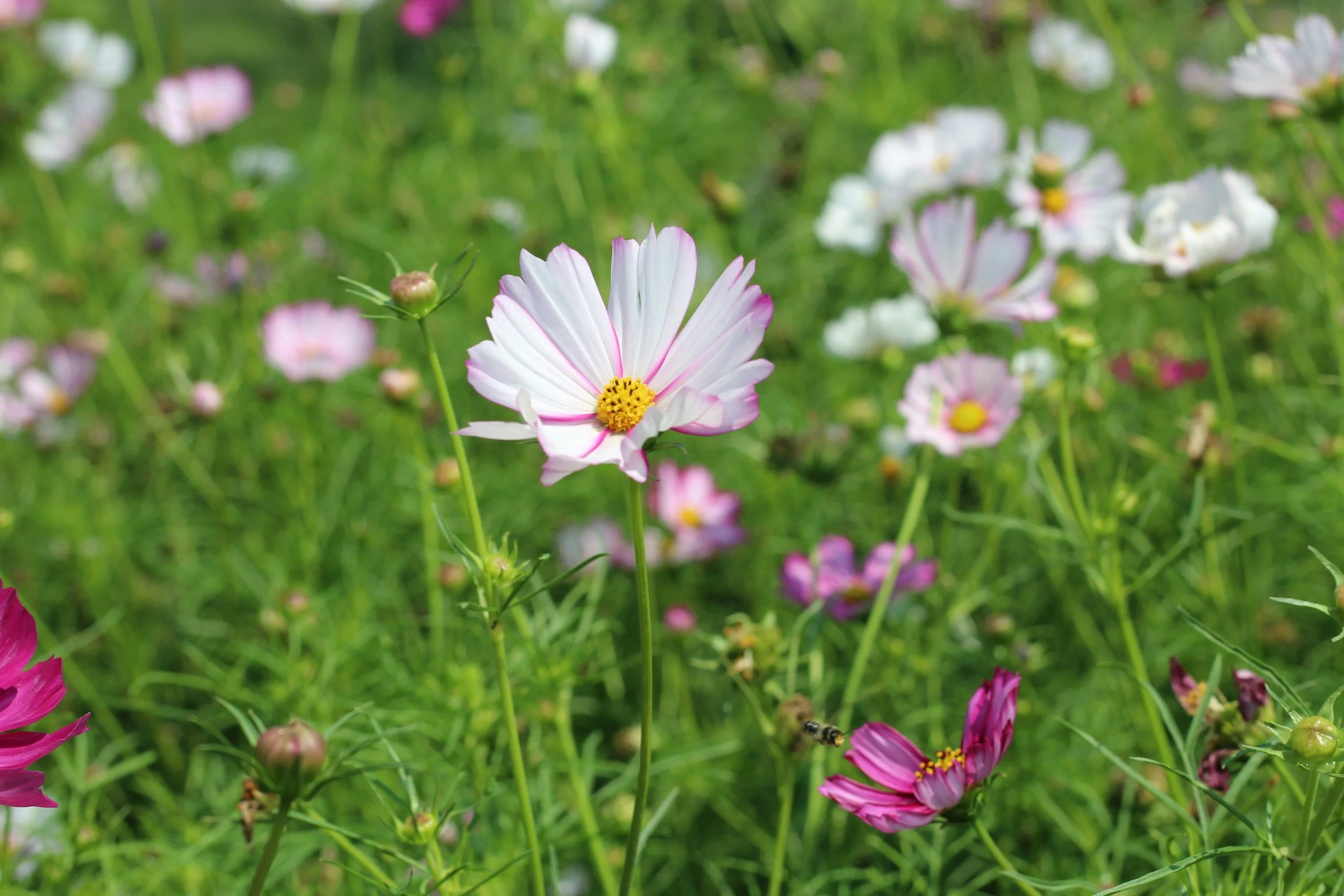
Cosmos, they just bounce above your bouquets.
5. Airy & Whimsical Flowers
This is my favorite category.
These are the flowers that make people stop and say...
"What IS that?"
They're the flowers dancing above the bouquet, catching the light, and making everything feel loose, natural, and just a little magical.
Some of my favorites are:
Cosmos
Dara
Ammi
Dill
Gomphrena
Flowering grasses
These flowers don't take over.
They simply add movement, softness, and that "fresh from the garden" feeling that I absolutely love.
The Secret?
The most beautiful bouquets aren't usually made with the most expensive flowers.
They're made with a thoughtful mix of these five flower types.
Once you start thinking about bouquets this way, you'll stop asking...
"What flowers should I grow?"
And start asking...
"Do I have all five ingredients?"
That's when flower arranging becomes fun instead of frustrating.
You don't need dozens of different flowers.
You just need the right ones.
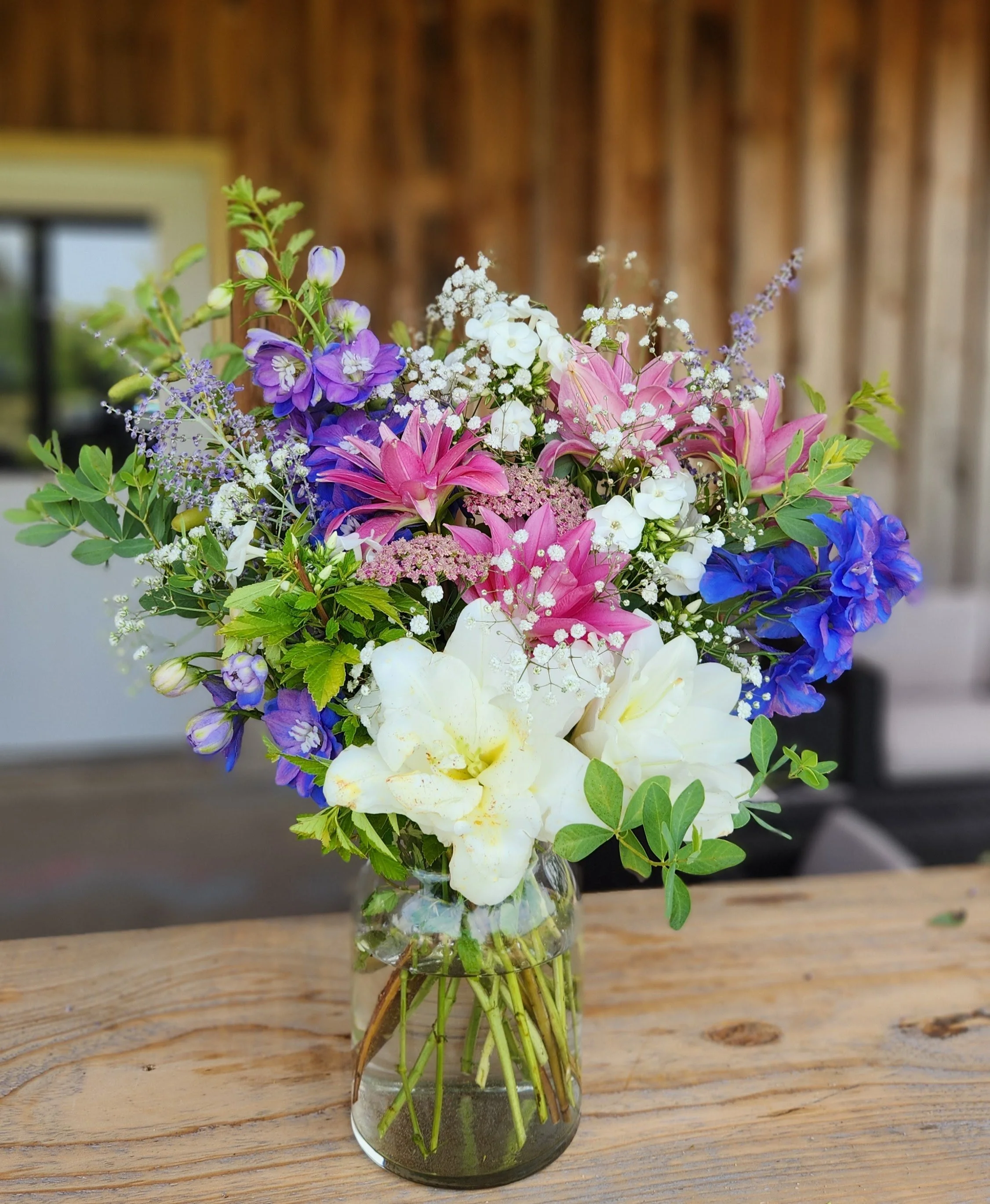
Want to Make Gorgeous Bouquets From Your Own Garden?
If you've ever looked at a bucket of flowers and wondered, "Now what?", I've got you covered.
Download my Simple Flower Arranging Guide, where I'll walk you through the basics of creating beautiful garden-style bouquets using the flowers you're already growing.
Inside you'll learn:
How to build a bouquet
How to Use these five flowers
Easy arranging tips anyone can follow
Simple tricks that make bouquets look professionally designed
Plus, you'll receive my weekly gardening emails full of practical growing tips, flower arranging inspiration, behind-the-scenes updates from Long River Family Farm, and first access to plant sales and workshops.
Happy gardening!
I hope this series gives you the confidence to not only grow beautiful flowers, but actually enjoy bringing them inside and arranging them.
Your flower-farming friend,
Michelle
Long River Family Farm