
What Plants In My Landscape Can I Use As A Cut Flower?
You Already Have a Cut Flower Garden... You Just Don't Know It Yet
What Plants In My Landscape Can I Use As a Cut Flower?
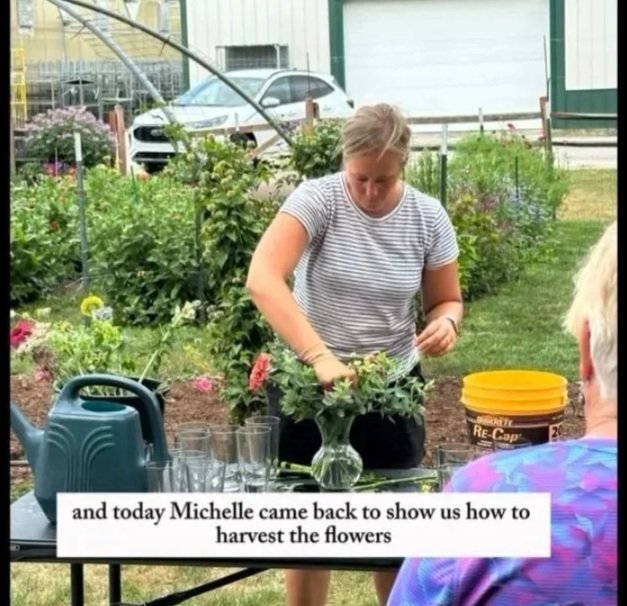
Last weekend I had the privilege of teaching a cut flower harvesting, conditioning, and arranging class at Koetsier's Greenhouse.
Mel’s cut flower garden is absolutely beautiful.
As we wandered the paths, I noticed something that made me smile.
Yes, there were gorgeous annual cut flowers everywhere...
...but what caught my attention were all the perennials and shrubs, and pops of color she added everywhere with petunias and other low-growing annuals.
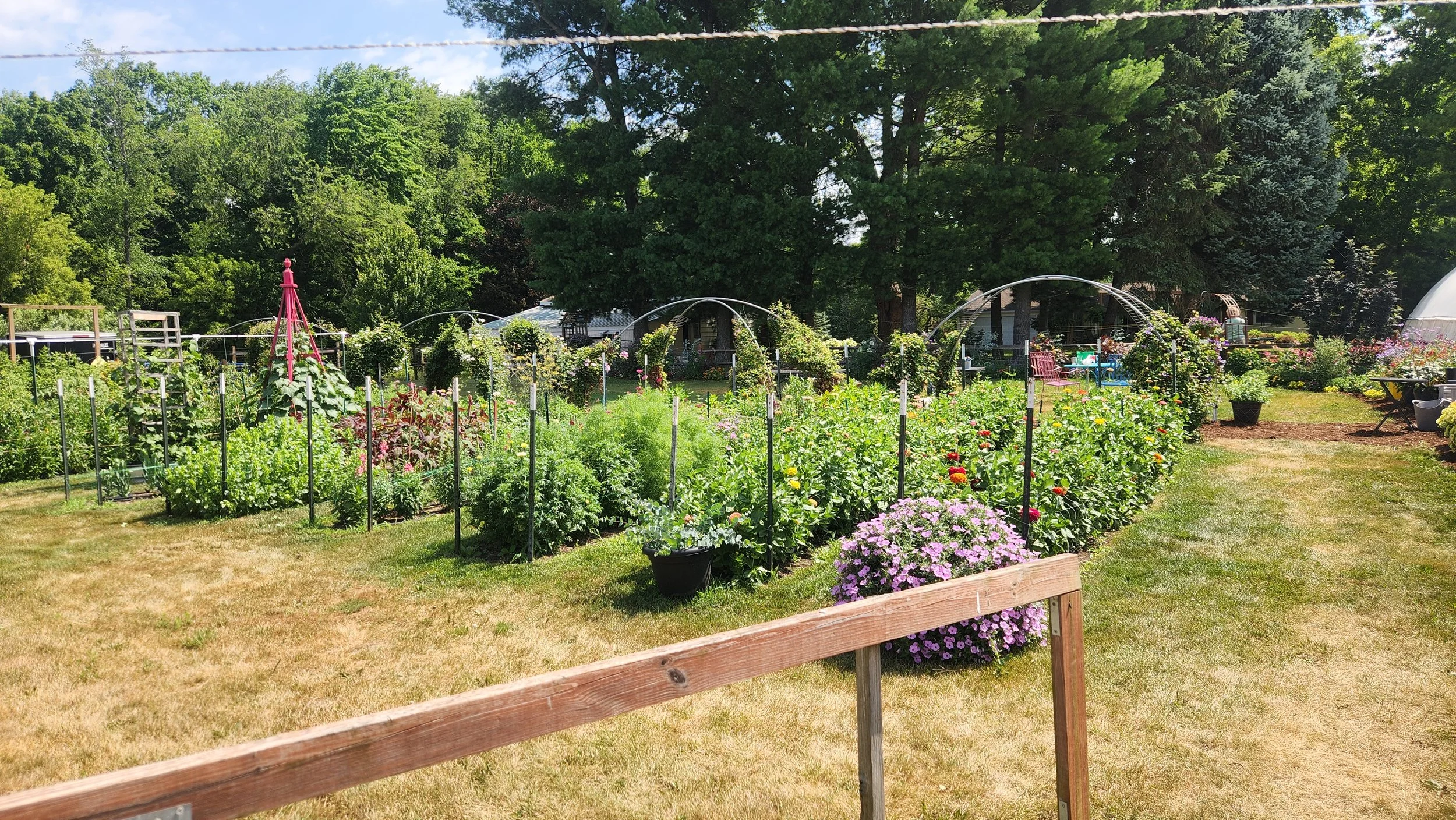
So cute. Some of the beds had big petunia or eucalyptus pots at the end, and she has arches up at one end for her clematis to climb, with a super fun wood chip pathway.
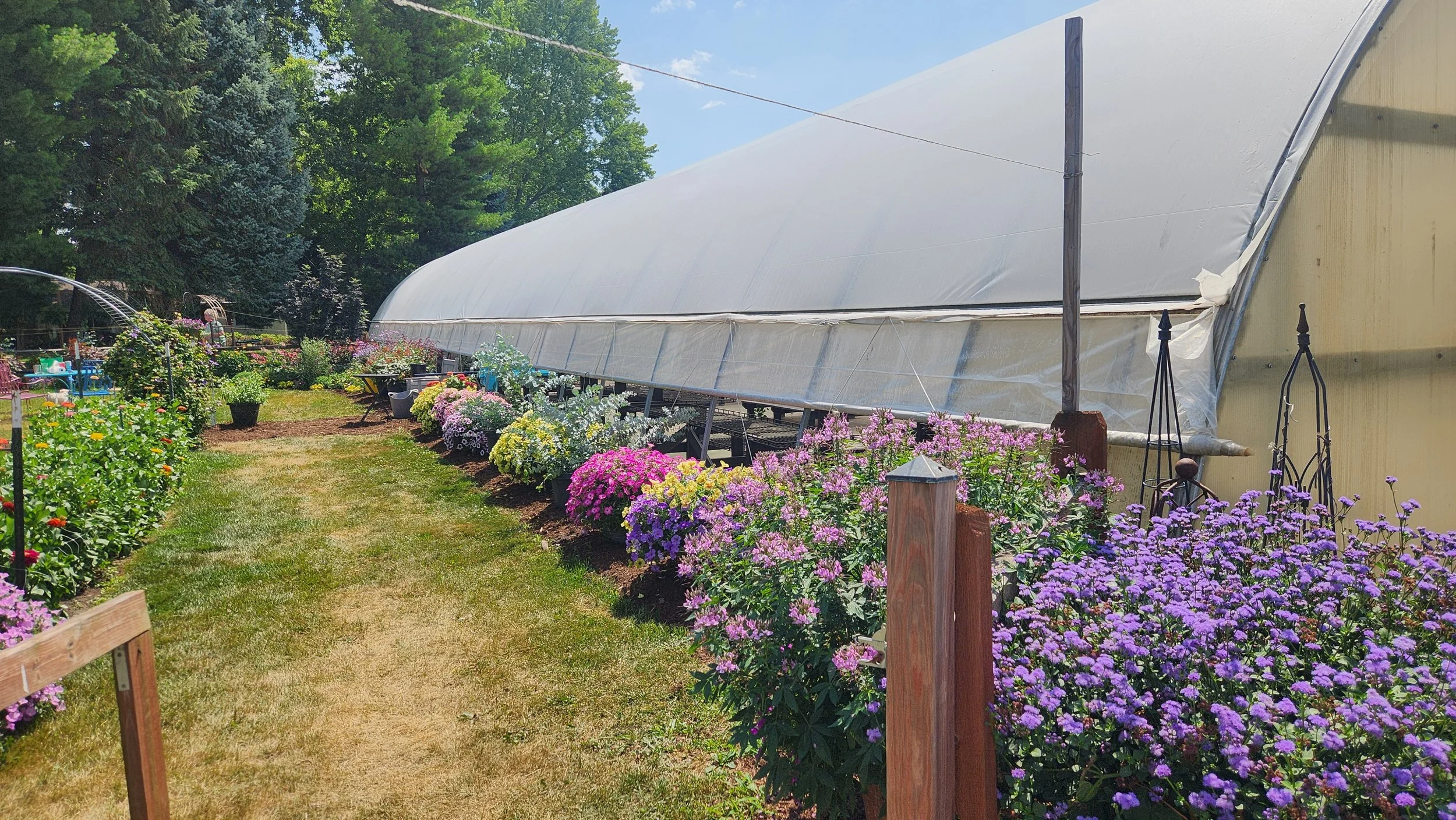
The border of her garden is lined wit petunia pots, ageratum, and pollinator pots.
As flower farmers, we sometimes become so focused on growing the "perfect" cut flowers that we forget how many incredible plants are already growing in our own landscapes.
When I got home, I looked out my window with fresh eyes.
Instead of seeing landscaping...
I saw bouquets.
Echinacea.
Hydrangeas.
Ninebark.
Hosta leaves.
Spirea.
Viburnum.
Phlox.
Ferns.
Alliums.
Liatris.
Black-eyed Susans.
Roses.
Even the baptisia growing quietly in one corner.
That last one surprised everyone in my class.
The Flower That Stole the Show
I had brought a bucket of flowers and foliage from my own garden.
You'd probably expect the bright zinnias to be everyone's favorite.
They weren't.
The biggest hit of the day was baptisia foliage.
It made every bouquet look beautiful.
All you need is one plant; that’s it. They get big, and they make lots of stems. Maybe two if you make a lot of bouquets.
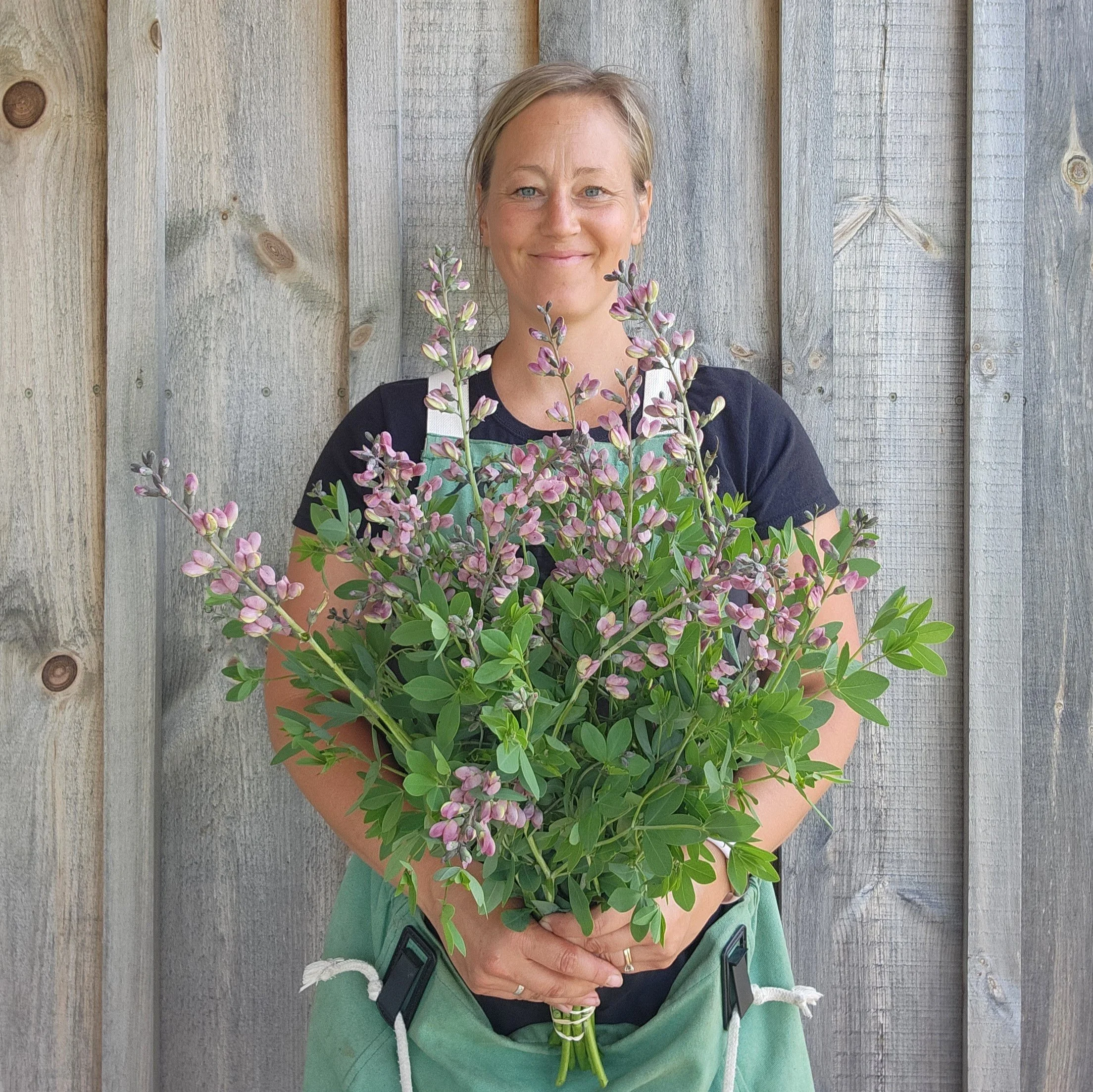
In the spring, baptisia flowers. During that weird phase when your summer flowers aren’t blooming but all your tulips and daffodils are finished. It comes in a variety of colors.
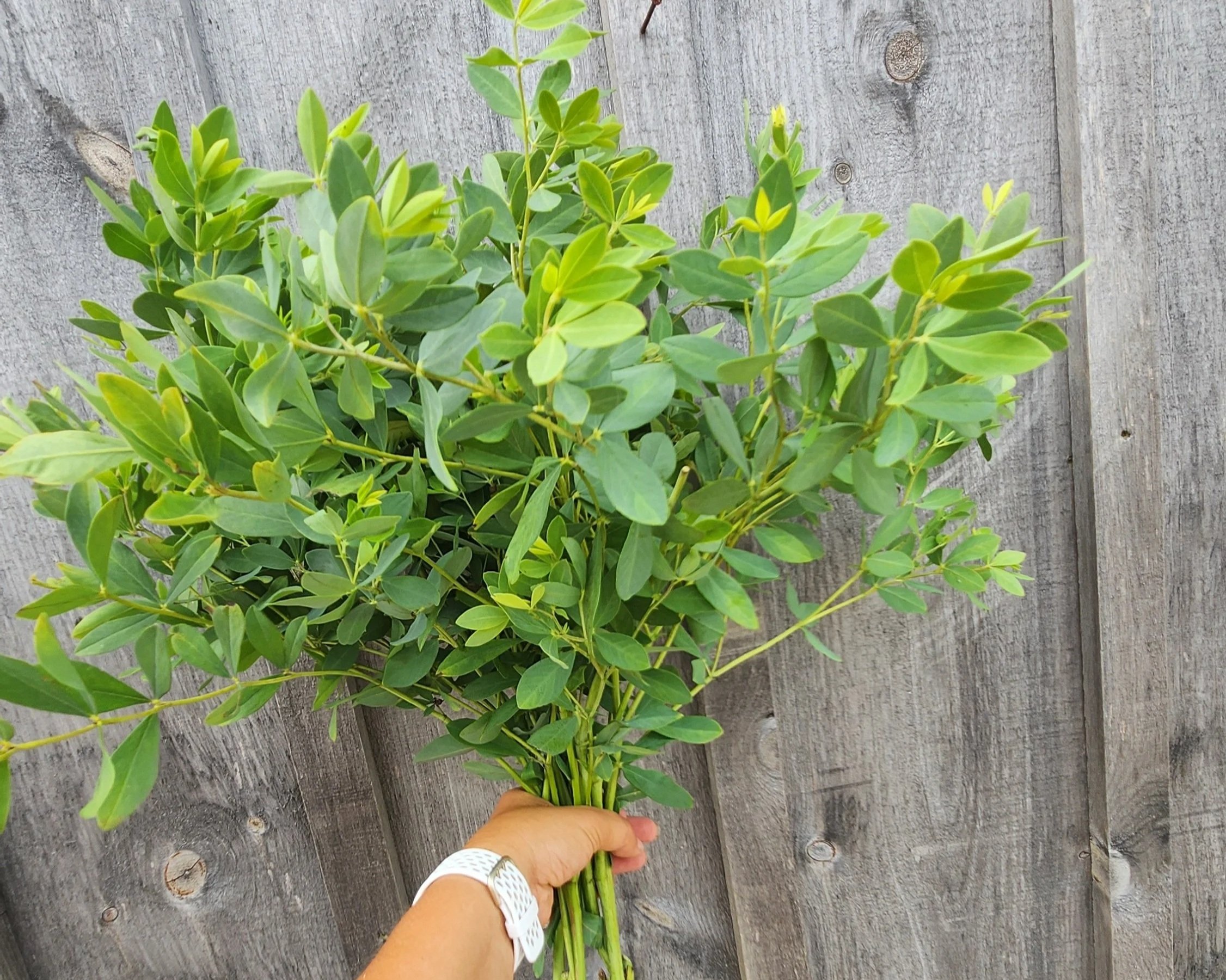
Here is a bunch of baptisia foliage. This is 10 stems.
As we arranged our flowers, we didn't start by holding a bouquet in our hands.
We built it right inside the vase.
The very first thing we did was weave a few stems of baptisia around the rim of the vase. That simple step created a natural framework, a little grid that supported every flower we added afterward.
I tucked in a few sprigs of mint for fragrance and a little autumn olive that grows wild along roadsides. Its soft silvery leaves contrasted beautifully against the deep green baptisia.
Only then did we begin adding flowers.
Three bright zinnias.
A few snapdragons.
Plumed celosia.
Then came the fillers: yarrow, echinacea, ageratum, and smaller zinnias.
Finally, we finished with a few wispy cosmos dancing above everything else.
Every bouquet was different.
Every bouquet was beautiful.
And the reason wasn't because everyone used the same flowers.
It was because everyone started with a strong foundation.
That simple foliage created movement, depth, and structure before a single flower was added.
Don't Worry About the Names
At one point during class, one of the ladies laughed and said,
"I'm terrible with all these flower names... but I love the flowers."
Honestly?
That's exactly where most of us start.
Don't let the names intimidate you.
You don't have to memorize every variety before you begin cutting flowers from your yard.
Start by noticing.
Notice what blooms in May.
Notice what blooms in July.
Notice which shrubs have interesting branches.
Notice the weeds growing along the roadside.
Did you know Queen Anne's lace grows wild in fields and ditches all over West Michigan? Autumn olive does too. Both can add incredible texture to a bouquet.
Some of my favorite bouquet ingredients aren't flowers at all.
They're branches.
Leaves.
Seed pods.
Grasses.
Texture.
Here's One Thing to Try This Week
Walk outside with a pair of clippers.
Find one shrub or perennial with interesting foliage.
Cut three stems.
Bring them inside and place them in a vase by themselves.
See how they naturally arch.
Notice how they create shape.
Then, the next time you cut flowers, start with that foliage first.
You might be amazed how much easier arranging flowers becomes.
Growing Flowers Is for Curious Minds
One of my favorite things about flower gardening is that there isn't one right way.
It's experimenting.
It's trying.
It's cutting something you've never cut before just to see if it lasts.
Sometimes it surprises you.
Sometimes it flops.
Both teach you something.
The more curious you become, the more beauty you'll discover growing right outside your back door.
You may not need a dedicated cut flower garden to enjoy bouquets in your home.
You might just need to start seeing your landscape a little differently.
So this week...
Be curious.
You never know what might end up in your next bouquet.
🌿 Bouquet Challenge
I'd love for you to try something this week.
Go outside and cut one thing you've never put in a bouquet before.
Maybe it's baptisia.
Maybe it's hosta leaves.
Maybe it's a branch from a shrub.
Maybe it's Queen Anne's lace growing in the ditch.
Take a picture of your bouquet and tag me on social media or send me an email. I'd love to see what you discover.
Happy growing,
Your flower farming friend,
Michelle